


Physical spaces influence how people feel and behave
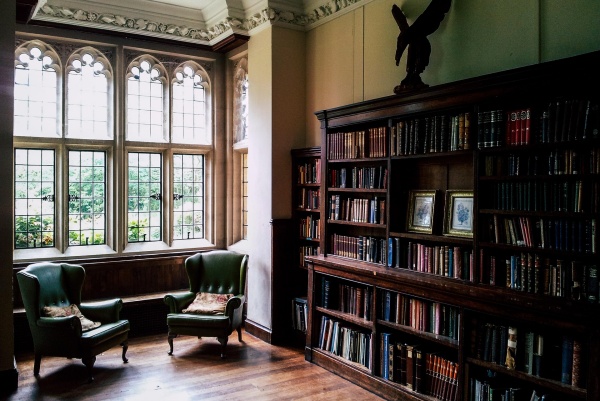
[Library. Photo Credit: Pixabay]
A 2025 study on 131 adults over two weeks found that greater daily exposure to natural daylight was associated with positive emotions, even after researchers accounted for physical activity.
These results relate to environmental psychology, a field that examines how people interact with the physical environments around them.
A classroom, a library, a cafe, and a dorm room might seem like ordinary parts of life, but how these places are designed can influence how comfortable, focused, or socially connected a person feels.
A 2026 review of research on schools, workspaces, and homes found that features such as lighting, temperature, air quality, noise, and space arrangement were linked to differences in attention, stress, motivation, relaxation, and overall well-being.
Rather than suggesting that one environment works best for everyone, these findings show how different physical conditions may support different psychological needs.
Lighting provides an example of this relationship because it can influence attention without necessarily changing every aspect of a person’s mental state.
A pilot study conducted in 2026 on 65 male Korean high school students investigated two kinds of LED lighting in the classroom over two weeks and discovered that those students who were exposed to the wavelength-enhanced lighting had a greater decrease in certain attentional errors, although the researchers found no significant effects on mood or sleep.
The study explains why environmental psychology examines attention, emotion, and behavior separately, rather than assuming that a more comfortable or visually appealing room will improve everything at once.
While artificial lighting may affect attention, natural surroundings can influence how people experience comfort and relaxation.
A 2024 study involving 30 university students found that looking at natural scenes through classroom windows led to greater feelings of comfort, relaxation, and pleasure than looking at mainly architectural scenes.
The researchers also observed better performance on measures related to attention during the natural-view condition.
These findings suggest that windows and outdoor scenery can serve a psychological purpose beyond simply making a classroom more aesthetically pleasing.
For students who spend several hours studying indoors, access to natural views may contribute to how restorative or mentally comfortable a space feels.
However, environmental psychology also considers how a room supports people’s activities and interactions, not just its visual appearance.
The 2026 review found that environmental stressors such as noise, poor air quality, and uncomfortable temperatures were associated with increased stress or reduced motivation, while flexible spaces supporting personal choice and social interaction were linked to better well-being.
This suggests that a space's psychological value may depend partly on whether people can choose environments that match their needs.
For example, a quiet corner of a library may suit students completing individual assignments, while a shared seating area may offer better opportunities for conversation and group activities.
These examples highlight how different arrangements can support different behaviors without requiring one space to serve every purpose.
A 2026 review published in the Journal of Environmental Psychology examined 119 publications on social interaction in public spaces and explored how physical environments create different opportunities for people to gather, communicate, or remain separate.
The researchers emphasized that similar physical arrangements do not always produce identical social interactions because people’s expectations, privacy needs, and ways of using a space also matter.
This perspective applies environmental psychology to everyday school life, where students constantly move between spaces designed for learning, resting, eating, and socializing.
A classroom that supports concentration may require different environmental conditions from a dining hall intended to encourage interaction.
Research does not indicate that a single design can guarantee happiness, better grades, or stronger social relationships, especially because individuals respond differently to their surroundings.
However, the studies show that physical environments are more than just passive backdrops for human activity.
By considering how lighting, natural views, noise, and spatial arrangements relate to attention, comfort, and interaction, schools and other institutions can make more informed decisions about the spaces people use every day.
Designing a space is, therefore, not only an architectural decision but also a psychological one.

- Gain Son / Grade 11
- Hebron Academy