
![THE HERALD STUDENT REPORTERS [US]](/assets/images/logo_student_us.png)
![THE HERALD STUDENT REPORTERS [Canada]](/assets/images/logo_student_ca.png)

Cellphones out: how 22 U.S. states banned classroom phones in 2025 alone
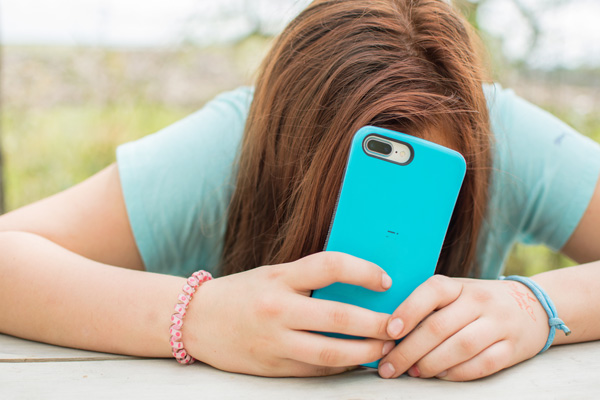
[A teenager holds a smartphone — the object that, for the first time in a decade, is being removed from most American classrooms. Photo Credit: Pixabay]
More than half of U.S. states have now passed legislation restricting cellphones in K-12 schools, marking a rapid state-by-state shift that has taken shape largely in the past two years.
As of late 2025, at least 26 states require public schools to ban or limit student cellphones during the school day, with 22 of these laws enacted in 2025 alone.
A handful of other states, including Alabama, Idaho, and Connecticut, have deferred to individual districts to set their own restrictions instead of writing a statewide rule.
The strictest version, known as a “bell-to-bell” ban, means students cannot use their phones from the moment they arrive on campus to the moment they leave.
Texas, New York, Virginia, Louisiana, Alabama, and Nebraska have all implemented bell-to-bell policies, while Arizona, California, and Ohio only restrict phones during instructional time and let students use them at lunch.
Some states, including Utah and Arkansas, have expanded their bans to include smartwatches and other personal electronic devices.
One of the most influential advocates for phone-free schools has been social psychologist Jonathan Haidt.
Haidt, a professor at New York University, published “The Anxious Generation” in 2024, arguing that the rise of smartphones and social media between 2010 and 2015 changed childhood in ways that led to sharp increases in teen anxiety, depression, and loneliness.
Haidt identified four foundational harms of what he calls “phone-based childhood”: social deprivation, sleep deprivation, attention fragmentation, and behavioral addiction.
His main policy recommendation is that all K-12 schools should be phone-free from bell to bell – an approach now written into several state laws.
The early results have been compelling.
In Arkansas, one of the first states to adopt a statewide bell-to-bell rule in February 2025, schools reported a 51 percent drop in drug-related offenses and a 57 percent drop in verbal and physical aggression in the first year of going phone-free.
New York, one of the largest states to adopt a bell-to-bell rule, implemented its statewide policy for the 2025-26 school year.
However, opponents argue that the policies come with real costs.
Parent groups, particularly in the years following high-profile school shootings, say phone restrictions cut off a critical channel for emergency communication.
A Pew Research Center survey conducted in October 2024 revealed that 68 percent of U.S. adults support banning cellphones during class in middle and high school, but only 36 percent support extending the ban to the entire school day.
Among Americans who oppose class-time phone bans, 86 percent cited the need for parents to be able to reach their children in emergencies.
Enforcement poses another challenge.
Districts that have implemented the bans have reported long lines to collect phones in the morning, students hiding backup devices, occasional theft of storage pouches, and big differences in how teachers respond to violations.
Some educators have also questioned whether removing phones only during the school day is really enough, since most adolescent screen time actually happens after school and on weekends.
Others point out that the bans only address part of the problem, since algorithms and design features that keep teens on their phones do not change once the school day ends.
Even so, most of the measurable outcomes so far – attendance, discipline reports, and student-reported focus – have leaned in favor of the bans.
Haidt has publicly predicted that a majority of American schools will be effectively phone-free by the 2026-27 school year.
Whether that shift will actually lead to the broader mental-health improvements he claims is still an open question.
What is not up for debate is that the American classroom is returning to something it has not been in almost two decades: a space where phones are not the main thing in the room.

- Hajin Cho / Grade 11
- The Hill School