
![THE HERALD STUDENT REPORTERS [US]](/assets/images/logo_student_us.png)
![THE HERALD STUDENT REPORTERS [Canada]](/assets/images/logo_student_ca.png)

Hospitality waste becomes community support: Las Vegas event donates surplus food
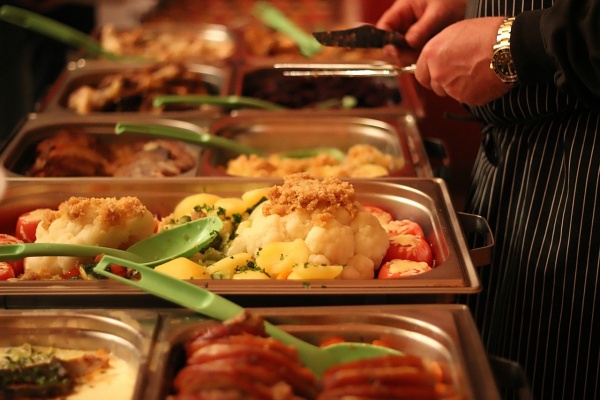
[The type of food available for repackaging, Photo Credit to Pixabay]
A four-day conference hosted at Caesars Palace in Las Vegas collaborated with Meals on Wheels America, Caesars Entertainment, and The Just One Project to distribute uneaten food to families, seniors, and community organizations across Southern Nevada.
The event was hosted on August 17-20, 2026, by Meals on Wheels America, which serves as the national leadership organization dedicated to addressing senior hunger and isolation.
Instead of immediately throwing away surplus food from the four-day event, Meals on Wheels redirected it to people who could use it.
This approach not only minimize food waste but also helps communities that struggle to get access to nutritious food.
Throughout the conference, the hotel had accumulated a decent amount of food surplus after each day.
The Caesar Entertainment team collected the leftover meals from each day of the conference, and Just One Project, a local nonprofit organization, repackaged the food according to food safety standards.
Although donating food waste is not advised in some countries due to sanitary concerns, organizations and hotels have created systems to ensure the food packaging aligns with food safety standards.
In this event, the hotel staff separated untouched prepared food and labeled it with its contents and date of production.
Programs like these act as a bridge between hotels and households experiencing food insecurity.
Hotels may want to donate food, but they may lack the necessary staff, transportation, or connections needed to deliver it directly to people in need.
At the conference in Caesars Palace, Just One Project facilitated distribution to local nonprofit partners and community groups in Southern Nevada.
This initiative tackles two pressing challenges: food insecurity in low-income areas and high food waste produced by the hotel.
According to Feeding America’s 2026 Map the Meal Gap study, in Southern Nevada, about one in six residents lack consistent access to nutritious food.
This food insecurity also extends to children, with one in four children living in food-insecure households across Southern Nevada.
Globally, food insecurity remains a significant issue, with 25.8% of the global population experiencing moderate to severe food insecurity in 2005, according to United Nations agencies.
On the other side of the issue, venues such as Caesars Palace produce an oversupply of food from all-you-can-eat buffets, events, and restaurants.
By donating surplus food to organizations such as Just One Project, Caesars Palace addresses both an operational and social objective.
Operationally, the hotel hands off the leftovers directly to Just One Project, reducing waste disposal costs, and socially, they contribute to the community's nutritional needs.
The imbalance of businesses having more food than they can sell or serve while families struggle to feed their families is an opportunity for both parties to help each other.
Overall, the whole operation followed a clear flow that other hospitality businesses can adopt: identify eligible food surplus, package and store food safely, coordinate pickup, and redistribute to local communities.
The Las Vegas conference serves as just one example of a successful food rescue operation.
Similar programs can also be implemented in restaurant chains, convention spaces, and wedding halls.
By adopting standardized food-rescue operations, the hospitality industry can reduce waste costs while providing support to the local communities.

- Amy Jung / Grade 11
- Earl Haig Secondary School