
![THE HERALD STUDENT REPORTERS [US]](/assets/images/logo_student_us.png)
![THE HERALD STUDENT REPORTERS [Canada]](/assets/images/logo_student_ca.png)

Central banks reverse course as energy shock drives a global turn toward rate hikes
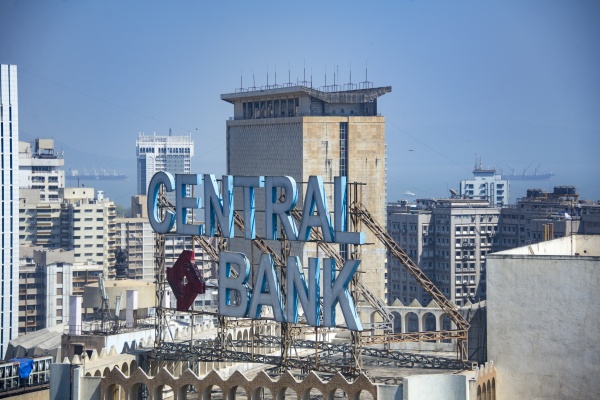
[Central Bank. Photo Credit to Pixabay]
Within nine days in September, four of the world’s largest central banks announced interest rate decisions.
These decisions marked a shift away from the rate-cutting cycle prevalent for the previous two years.
Behind this shift was a common driver: sustained increases in crude and refined energy prices caused by the prolonged conflict in the Middle East, which pushed inflation above target across most major economies.
The U.S. Federal Reserve raised its benchmark federal funds rate by 25 basis points to a target range of 3.75% to 4% on September 16th, marking its first increase since 2023.
This decision was approved through a unanimous 12-0 vote by the Federal Open Market Committee.
This decision marked the first rate move under Kevin Warsh, the 17th Federal Reserve chair who took office on May 22, 2026, succeeding Jerome Powell.
In its post-meeting statement, the committee noted that inflation remains elevated while economic activity has also been expanding at a solid pace.
Federal Reserve officials' updated projections placed year-end rate forecasts between 4.1% and 4.4%, indicating the possibility of a further increase in 2026.
Six days earlier, on September 10, the European Central Bank raised its main refinancing rate to 2.65% and its deposit facility rate to 2.5%.
This decision was the ECB’s second increase in rates this year, with its June decision increasing the deposit rate from 2% to 2.25%.
The inflation rate in the Eurozone accelerated to 3.3% in August, the highest it's been in three years, exceeding the 2% target rate set by the ECB.
On September 18th, the Bank of Japan also raised its policy rate by 25 basis points to 1.25%, the highest level seen since 1995.
While board members Toichiro Asada and Ayano Sato voted against this decision, it ultimately passed with a 7-2 vote.
This marked the sixth increase since the Bank of Japan began normalizing policy back in March 2024.
Although higher interest rates typically strengthen a currency, the yen weakened following the announcement, as the increase had been widely anticipated and the gap between Japanese and U.S. rates remained wide.
Conversely, the Bank of England voted on September 17th to maintain its Bank Rate at 3.75%.
The Monetary Policy Committee passed this decision through a 6-3 vote, with three members voting to raise the rate to 4%.
The inflation rate in the United Kingdom increased to 3.1% in August, and the committee expects inflation to further increase slightly above 4% in the first quarter of 2027.
The Bank said higher global energy costs had so far had a limited effect on price and wage setting in the UK, but warned that the longer the volatility persists, the more likely it becomes that it will need to raise Bank Rate.
As of September 22, market pricing indicated roughly a two-thirds probability of a quarter-point increase at the Bank's November meeting.
In Asia, the Bank of Korea also raised its base rate from 2.5% to 3% through consecutive increases, according to its September Monetary Policy Report.
China has been a notable exception, as the People’s Bank of China decided to hold its key lending rates at record lows for the sixteenth consecutive month.
Its one-year loan prime rate was 3%, and its five-year rate was 3.5% in September.
Next major decisions for central banks are set for late October and early November.
The Federal Reserve’s meeting will take place on October 28th, the ECB’s on October 29th, the Bank of Japan’s on October 29th and 30th, and the Bank of England’s on November 5th.

- Minsung Choi / Grade 12
- Shekou International School