
![THE HERALD STUDENT REPORTERS [US]](/assets/images/logo_student_us.png)
![THE HERALD STUDENT REPORTERS [Canada]](/assets/images/logo_student_ca.png)

New breakthrough in genetic research opens the door for human limb regeneration
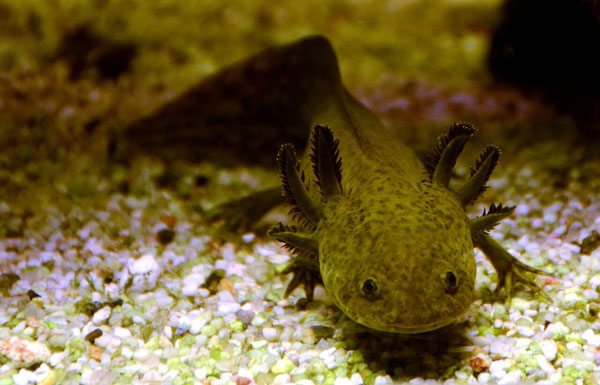
[A photo of an axolotl. Photo Credit to Wikipedia Commons]
On May 9th, 2026, a groundbreaking scientific study was published, unveiling the most significant work in the field of regenerative medicine that has ever been seen.
Scientists have long understood that certain animals such as salamanders, zebrafish, and axolotls possess the ability to regenerate their limbs.
As a result, research has been made over the decades to determine if this trait could be mimicked by mammals, and ultimately, humans.
Historically, past research has consistently opposed this idea, until new genetic research gave way to the possibility that humans may in fact be able to grow back their lost limbs much like the axolotl or zebrafish.
The study, published in the Proceedings of the National Academy of Sciences, was a collaborative effort between researchers from Wake Forest University, Duke University, and the University of Wisconsin-Madison.
The researchers examined mice, axolotls, and zebrafish and identified a common set of genes, named the SP genes, which appear to dictate how and if a species can regenerate their lost body parts.
The methodology of this study revealed that when SP genes were impaired in axolotls, bone growth within missing limbs was completely shut off, confirming that these genes are what drive the regenerative process of these animals.
Furthermore, when the researchers developed a gene therapy modelled after zebrafish biology and used it on mice, partially giving them regenerative properties otherwise impossible for their species.
The medical significance of this study is profound, as more than one million amputations are performed worldwide yearly, stemming from various reasons such as diabetes-related vascular disease, traumatic injury, infections, and cancer, with this figure projected to rise as global population age and diabetes rates increase.
Although their work is still in its early stages, the goal of the researchers is to eventually move away from artificial prosthetics and focus on restoring the movement, sensation, biological function, of amputees worldwide.
This newfound discovery heavily correlates to another study published in Nature Communications on April 17th, which was led by researchers from the Texas A&M University’s College of Veterinary Medicine and Biomedical Sciences, with a similar yet equally groundbreaking finding.
Much like in the previous study, the researchers reported a way in which mammals could regenerate limbs that would otherwise be unable to do so.
The team’s primary hypothesis was that mammals possess the capacity to regenerate limbs, but that ability lies dormant within them, unable to be used due to the body’s response to injury.
When mammalian tissue is damaged, fibroblast cells flood the wound to seal it quickly with a scar, and while this is efficient in closing said wound, it makes it impossible to regrow the limb in the future.
The researchers found a way to intervene in this process, using two types of signalling proteins to manipulate the injury response of fibroblast cells.
The first signalling protein, fibroblast growth factor 2 (FGF2), reprograms fibroblast cells to differentiate, preventing them from forming scar tissue.
The second signalling protein, bone morphogenetic protein 2 (BMP2), then instructs the cells on what they need to build, which in this case, would be the missing limb.
In mice, the combination of these 2 proteins was able to restore bones, tendons, ligaments, and joint structures in missing digits, although not always the same size and shape of the original.
The implications for clinical applications are vast and could be seen in the near future.
BMP2 is already an approved tool in reconstructive surgery, and FGF2 is set to receive the same regulatory status, indicating a massive jump in wound healing and scar reduction before full-on regeneration becomes viable.
Neither study has proposed that human limb regeneration is the next step, as the studies were conducted on animals, and the leap from mice digit restoration to human limb restoration is vast and not thoroughly researched.
While the research provided by both studies show that mice, which are much smaller and genetically very different from humans, can grow back their fingers through these methods, the experiments often resulted in the regrown digits being disfigured.
This implies that this genetic research is still in its early stages and is not yet ready for human trials, nor is it safe to use in a medical setting.
To determine if the methods used in either study will be suitable for victims of limb loss, further experiments will have to be done to verify that the procedure can be done safely and without risk to patients.
Nevertheless, the findings presented by the two research teams serve as a great milestone in human medical advancements, and will likely become the stepping stones for future research that will revolutionize the healthcare industry.

- Ian Kim / Grade 10 Session 7
- R.E. Mountain Secondary School