
![THE HERALD STUDENT REPORTERS [US]](/assets/images/logo_student_us.png)
![THE HERALD STUDENT REPORTERS [Canada]](/assets/images/logo_student_ca.png)

Ebola outbreak raises global concern as cases continue to climb
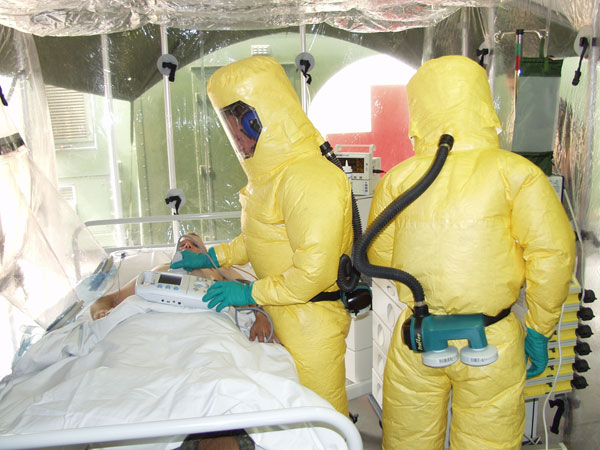
[Virus, Credit to Pixabay]
On May 20th, the World Health Organization(WHO) announced that the Ebola virus in the Democratic Republic of Congo(DRC) and Uganda is spreading rapidly and poses a high risk at the national and regional level.
Ebola is a severe viral disease that spreads through direct contact with the bodily fluids of infected individuals.
Symptoms typically begin with fever, weakness, headaches, and muscle pain before progressing to vomiting, diarrhea, dehydration, and in some cases, internal or external bleeding.
The disease has a high fatality rate if patients do not receive prompt medical treatment and supportive care.
Health experts emphasize the severity of the situation as the outbreak involves the Bundibugyo strain of Ebola, a rare variant for which there are no valid vaccines or proper treatments.
The WHO reports that hundreds of suspected cases have been identified so far, with death rates continuing to climb each week.
Earlier this month, the WHO reported more than 500 suspected cases and over 130 deaths during the outbreak.
However, within a few days, the number of suspected infections had significantly increased to nearly 750, while the suspected death count reached approximately 177.
In most instances, the virus was concentrated in the eastern part of the DRC, specifically in Ituri Province, though infections have also spread across several different areas and crossed the international borders into Uganda.
As the cases have appeared in urban areas, health officials have growing concerns due to the probability of the virus spreading more rapidly with high population density and increased travel.
The WHO has now classified the national risk level in the DRC as “very high.”
Officials warn that the outbreak may have been spreading undetected for months before the scale of the crisis was fully realized.
One major challenge is the lack of approved vaccines for the Bundibugyo strain.
While there are existing vaccines for the more common Zaire strain of Ebola, scientists are still searching for effective protection for this different version of the virus.
One promising treatment under consideration is obeldesivir, an antiviral drug originally developed for COVID-19.
Another promising experimental therapy called MBP134 has also shown positive results in animal studies involving multiple Ebola strains.
However, international health organizations are facing logistical and political difficulties while attempting to cope with the outbreak.
Some treatment centers have reportedly faced attacks or resistance from local communities, while humanitarian groups have warned that shortages in funding and medical personnel are impeding response efforts.
The WHO argues for building stronger surveillance systems and community cooperation to stop further transmission.
Unfortunately, the outbreak has sparked concern outside Africa.
One American doctor who contracted the virus while working in the DRC was transferred to Germany for specialized care after discussions among U.S. officials regarding transportation and containment procedures.
Experts emphasize that the overall global risk remains relatively low for now; however, health authorities stress that early intervention is critical.
WHO Director-General Tedros Adhanom Ghebreyesus has described the outbreak’s spread and scale as significantly alarming and urged for stronger international cooperation to prevent the virus from spreading further across the region.

- Yezi Jang / Grade 11
- Asia American International Academy