
![THE HERALD STUDENT REPORTERS [US]](/assets/images/logo_student_us.png)
![THE HERALD STUDENT REPORTERS [Canada]](/assets/images/logo_student_ca.png)

Brain scans show how manic depression can be quickly relieved by ketamine
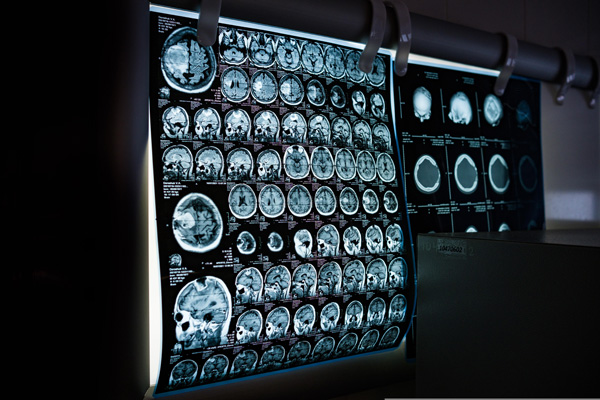
[Brain scans. Photo Credit: Pixabay]
A new brain imaging study published in Molecular Psychiatry on March 5, 2026, revealed how ketamine quickly alleviates treatment-resistant depression by rewiring important brain receptors.
Researchers discovered that ketamine alters the activation of a crucial brain receptor that facilitates neuronal communication in particular brain regions associated with reward and mood.
Improvements in patients' symptoms were closely correlated with these changes.
Major depressive disorder(MDD) is one of the leading causes of disability and a significant worldwide health issue.
Approximately 30% of individuals with a depression diagnosis experience treatment-resistant depression (TRD), where typical antidepressant drugs are unable to alleviate symptoms.
Professor Takuya Takahashi of the Department of Physiology at Yokohama City University Graduate School of Medicine in Japan spearheaded the study.
The group directly observed alterations in the glutamate α-amino-3-hydroxy-5-methyl-4 propionic acid receptor (AMPAR) using an improved positron emission tomography (PET) imaging technique.
This receptor is a crucial protein that helps regulate brain cell communication and is crucial for glutamatergic transmission and synaptic plasticity in ketamine-treated patients.
The study used [¹¹C]K-2, a PET tracer that the scientists had previously developed.
This tracer allowed scientists to see cell-surface AMPAR in the living human brain.
Prior laboratory and animal research suggested that AMPAR activity may be involved in ketamine's antidepressant effects.
The current study offers the first concrete proof that this process takes place in humans.
The researchers integrated data from three registered clinical trials conducted in Japan to perform the analysis.
The study group consisted of 49 healthy individuals as controls and 34 patients with TRD diagnoses.
Over the course of two weeks, patients received either intravenous ketamine or a placebo.
PET brain imaging was conducted both prior to and following the last dose.
This method allowed researchers to track how the brain's AMPAR levels and distribution changed over time.
The findings demonstrated that, in comparison to healthy individuals, those with TRD had extensive abnormalities in AMPAR density.
Rather than being distributed throughout the entire brain, these variations were found in particular brain regions.
These findings offer concrete human evidence that links processes previously discovered in animal research to actual clinical antidepressant benefits.
The results go beyond elucidating the mechanism of action of ketamine and might also be useful in clinical settings.
AMPAR PET imaging may be used as a biomarker to help physicians assess and forecast how patients with TRD will react to ketamine therapy.
Identifying reliable biological markers for treatment response remains a key objective in mental health care because many individuals do not react to conventional antidepressants.
This work helps close a long-standing gap between laboratory research and clinical psychiatry by enabling scientists to directly examine AMPAR activity in the actual human brain.
The findings point to AMPAR regulation as a key mechanism underlying the rapid antidepressant effects of ketamine and suggest that AMPAR PET imaging may eventually direct more individualized treatment plans.
Moving forward, this research may help provide more targeted treatments for those with treatment-resistant depression.

- Hyeonji Nam / Grade 11
- Chadwick International