
![THE HERALD STUDENT REPORTERS [US]](/assets/images/logo_student_us.png)
![THE HERALD STUDENT REPORTERS [Canada]](/assets/images/logo_student_ca.png)

Scientists discover a possible universal cancer vaccine from COVID mRNA vaccines
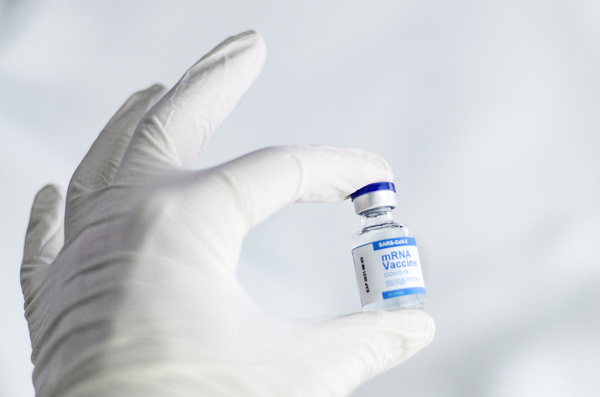
[Vaccine. Photo Credit to Pixabay]
On October 22nd, 2025, a groundbreaking study on a possible universal cancer vaccine was published in the journal Nature.
Research teams from the University of Florida and the University of Texas have discovered that mRNA vaccines used from the COVID-19 pandemic may correlate with increased survival rates for cancer patients undergoing immunotherapy.
Immunotherapy, a treatment where it boosts the body’s own immune system to recognize and eliminate cancer cells.
Although it is widely used to treat the disease, immune checkpoint inhibitors (ICIs) are still the most common form of the therapy.
However, most cancer patients with advanced-stage cancer do not respond well to these drugs, often due to physical exhaustion from previous treatments.
To overcome this, the research teams – mentioned above, had analyzed data from cancer patient records, alongside mouse models in order to further validate their findings.
In July 2025, co-senior author Elias Sayour’s team at the University of Florida published these results from a preclinical study.
The team successfully combined ICIs with an experimental non-specific mRNA vaccine, which had successfully evoked an anti-tumor response in mice by ‘waking up’ their immune activity rather than targeting a specific tumoral protein.
These findings prompted a former member of Sayour’s lab, Adam Grippin from the University of Texas MD Anderson Cancer Center, to question if pre-existing COVID-19 mRNA vaccines would have similar effects.
The research team analyzed 1000 patients who received the COVID mRNA vaccines within 100 days of starting immunotherapy between August 2019 and August 2023 at the MD Anderson Cancer Center, stage 3 or 4 180 lung cancer patients and 43 melanoma patients.
The results showed strong connections between the vaccine and the immunotherapy – patients who received the vaccine had improved survival rates.
The median survival had nearly doubled for lung cancer patients, rising from 20.6 months to 37.3 months, while melanoma patients’ survival rates increased from 26.7 months to a range of 30 to 40 months – with some still alive at the time of data collection.
There had been no effects for those who had received pneumonia and influenza treatments, indicating that the vaccine’s impact may be broader than initially anticipated.
Mouse model experiments showed that combining ICIs with mRNA vaccines could transform unresponsive cancers into responsive ones, effectively halting tumor growth.
This had been even more groundbreaking for scientists, due to the different mechanisms used for the vaccine.
Traditionally, vaccine development has focused on targeting the antigens expressed by cancer cells, using the weakened or inactive parts of a virus – also triggering the immune system for built defense.
However, the research had revealed that mRNA vaccines do not only prevent infection, but also “wake up” and prompt the body’s immune system to fight tumors.
The mRNA, also known as messenger RNA, a small strand of genetic code had been delivered through the vaccine, allowing cells to read it as an instruction to manufacture a spike protein, alerting the immune system to create a defense system.
This process would also create antibodies and memory cells, trained to recognize and attack it if it appears again.
Not only this, but the COVID mRNA vaccines had also helped effectively deploy T-cells.
Another reason why immunotherapies had not worked for most patients had been due to lack of T-cells that kill cancer cells.
Although the vaccine had not created tumor fighting T-cells, it had also made dendritic cells, a type of white blood cell, more alert and effectively deploy the T-cells.
Due to this, scientists believe unmodified mRNA formulations may activate stronger innate immune activation, enhancing antitumor effects further on.
However, as findings are still preliminary, the study has to be validated through a larger and randomized clinical trial.
Lennard Lee, Dphil, associate professor at University of Oxford’s Center for Immuno-Oncology, stated,“This is an intriguing finding, yet we should be cautious before drawing conclusions.”
“Only a randomized trial can tell us whether the vaccine itself drives the effect.”
The research is already underway, conducted through the University of Florida-led OneFlorida+ Clinical Research Network, which includes clinics and hospitals spanning across six states.
If findings validate in the Phase 3 clinical trial, Sayour had hypothesized, “We could design an even better nonspecific vaccine to mobilize and reset the immune response, in a way that could essentially be a universal, off-the-shelf cancer vaccine for all cancer patients.”
The research had also been presented at the ESMO Annual Meeting held in Berlin, Germany, and received funding from the USA Health Secretary, Robert F. Kennedy Jr.
The discovery has been hailed as a major milestone in more than a decade worth of work on mRNA-based treatments, as well as a possible universal cancer vaccine which could strengthen the effects of immunotherapy.

- Eunseo Choi / Grade 8
- Seoul Foreign School