
![THE HERALD STUDENT REPORTERS [US]](/assets/images/logo_student_us.png)
![THE HERALD STUDENT REPORTERS [Canada]](/assets/images/logo_student_ca.png)

Scientists revive brain activity after seven days frozen, marking scientific breakthrough
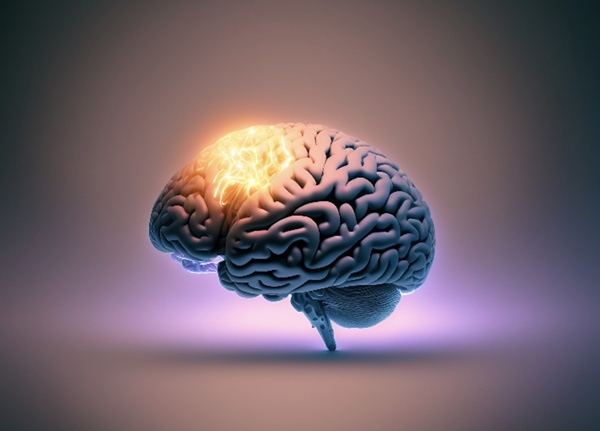
[Idea Brain. Photo Credit to Stock Snap]
In early March 2026, neuroscientists based in Germany reported a significant breakthrough; they successfully restored electrical neural activity in a mouse brain tissue after it had been frozen for seven days.
This marked a major milestone in cryopreservation research because it was the first experiment to demonstrate that neural activity could partially recover after severe cooling.
The study was conducted by researchers and collaborators working in neuroscience and cryobiology at Friedrich-Alexander University Erlangen-Nürnberg in Germany.
Their findings were published in the journal Proceedings of the National Academy of Sciences in March, and showed how preserved brain tissue could regain neural responses after controlled thawing.
The experiment specifically focused on the hippocampus, the brain region crucial for learning and memory.
Freezing typically destroys brain cells due to water forming ice crystals rupturing delicate neuron structures.
However, researchers froze thin slices of mouse brain tissue using cryoprotective chemicals designed to prevent the formation of damaging crystals.
They further rapidly cooled it into a glass-like state using liquid nitrogen at a temperature around -196 degrees Celsius rather than allowing ice crystals to form.
This process enabled researchers to preserve both the neuron’s physical structure and functional activity.
The tissue samples, which were approximately 350 micrometers thick, were frozen for periods ranging from about 10 minutes to as long as 7 days before being carefully rewarmed and reintroduced oxygen and nutrients in controlled conditions.
Following this step, researchers separately tested whether neurons could still communicate through electrical impulses using electrophysiology techniques and electron microscopy.
They discovered that some neural circuits were still capable of transmitting signals and responding to simulation, communicating through synapses, and demonstrating long-term potentiation (LTP), a critical process in learning and memory.
These results showed that functional recovery was possible under laboratory conditions.
Dr.Alexander German explained in the journal that the experiment was a success through a process called vitrification, a method which prevents ice crystal formation by turning cellular liquids into a glass-like state.
Kirill Volnyski, a neuroscience professor at the Queen Square Institute of Neurology at University College London, praised this research as a medical breakthrough stating: “As a proof of principle, it genuinely shifts the boundary of what seems biologically possible.”
Researchers have further emphasized that these results do not mean that whole brains can be revived or made fully functional.
However, the successful results demonstrate that limited brain tissue can withstand freezing preservation under controlled conditions, pointing towards future medical applications.
Researchers predict a major long-term possibility of this work could be improving how organs are preserved for transplantation. This would allow organs to be stored longer and transported further while reducing the risk of further damage.
Further, development in preservation techniques could also indicate a possible increase in survival rates for patients waiting for transplants.
Scientists also believe that other possible applications could include developing emergency medical techniques, such as slowing brain damage after cardiac arrest through controlled cooling.
This could also indicate a start to temporary life preservation research, a concept long considered science fiction.
Although the results were promising, significant obstacles remain before these techniques could be extended and applied to larger organs or entire living systems
The preservation of whole brains is a significantly more complex issue, presenting challenges far beyond those involved in maintaining small tissue samples.
Nevertheless, if future studies manage to successfully scale these methods, this work could represent the first steps to transforming future medical research and treatment possibilities..
While the concept of fully preserving a brain is still far from reality, this advancement could mean a start to notable development in neuroscience and long-term preservation.

- Sunny Lee / Grade 11
- Cornerstone Collegiate Academy of Seoul