
![THE HERALD STUDENT REPORTERS [US]](/assets/images/logo_student_us.png)
![THE HERALD STUDENT REPORTERS [Canada]](/assets/images/logo_student_ca.png)

61st session of the United Nations Human Rights Council targets tangible change
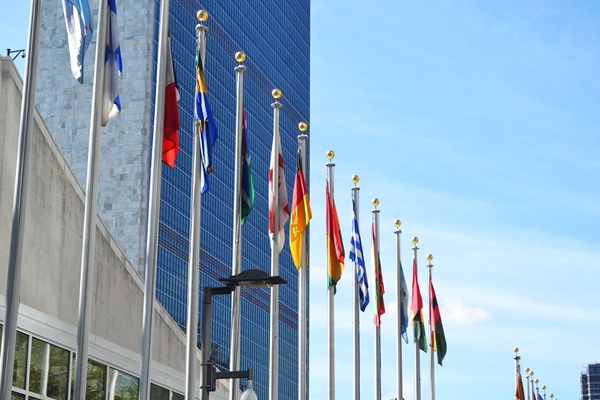
[Flags. Photo Credit to Pixabay]
The United Nations Human Rights Council opened its 61st regular session in Geneva on February 23, 2026, and is scheduled to run until March 31, 2026.
The UN Human Rights Council is a 47-member intergovernmental body mandated with promoting and protecting human rights worldwide.
The Council’s diverse opening agenda reflects the broad scope of its focus this year, combining specific country situations with broader global themes, as revealed on its official website.
It includes formal debates on crises in places such as Afghanistan, Myanmar, Sudan, and Haiti, where reports raise concerns about ongoing violence, restrictions on basic freedoms, and the need for accountability for past abuses.
In addition to these country‑specific items, the session will also examine issues such as climate change and biodiversity, looking at how environmental harm and climate policies affect people’s rights and livelihoods.
Other debates will address children’s rights and poverty, highlighting how conflict, economic inequality, and environmental stress shape whether people can enjoy their fundamental rights.
Together, these agenda items demonstrate the Council’s commitment to connecting immediate human rights emergencies with longer‑term structural problems that influence justice and dignity around the world.
The 61st Council (HRC61) has specific plans for addressing these issues.
According to the official program, Afghanistan is scheduled first with a dedicated report on how women and girls are faring under Taliban rule, plus input straight from victims on what justice and reparations should look like.
Myanmar is scheduled to receive follow-up attention on an independent probe's calls for holding officials accountable over atrocities against the Rohingya and other groups.
Sudan and the Democratic Republic of the Congo will feature enhanced interactive talks addressing their escalating human-rights crises.
Meanwhile, Haiti and the Central African Republic will be the focus of high-level panels deliberating measures to protect civilians and steps toward peace and reconciliation.
HRC61 is also considering a global analytical study on economic, social, and cultural rights, particularly regarding foreign debt and human rights in employment.
Additionally, the rights of specific groups, such as children affected by armed conflict, persons with disabilities, human rights defenders, and people of African descent, will be reconsidered as well.
There hasn’t been extensive news coverage on the 61st Council, though it has been negatively framed.
In Fox News, after being cut off by the Council, NGO speaker Anne Bayefsky claimed, “Free speech is non-existent at the U.N. so-called ‘Human Rights Council.’”
The outlet focused on criticism of the Council’s handling of dissent and questions of bias.
Other media, however, have taken a broader perspective.
Reuters and BBC News covered the session as part of the UN’s regular work on global rights issues, highlighting its discussions on Afghanistan and Myanmar rather than controversies over procedure.
Both news agencies acknowledged disagreements among member states but presented them as typical of complex international negotiations, not simply evidence of repression.
As the 61st session draws to a close by late March 2026, it will debate on Africanistan’s women, Myanmar’s Rohingya accountability, and civilian safeguards in Sudan, Haiti, and elsewhere.
These debates could yield resolutions that will shape national courts and bring significant change.
However, real impact will depend on states acting beyond the Geneva talks.
These discussions can bridge human rights standards, such as life and non-discrimination, and translate them into tangible steps towards justice.

- Chaewon Lee / Grade 11
- Seoul Foreign School