
![THE HERALD STUDENT REPORTERS [US]](/assets/images/logo_student_us.png)
![THE HERALD STUDENT REPORTERS [Canada]](/assets/images/logo_student_ca.png)

Middle East conflict sends oil markets into shock
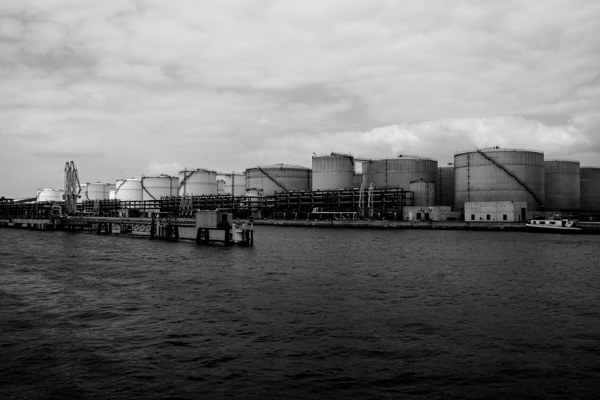
[Photo of a port area near Hormuz. Photo Credit to Pixabay]
Following the recent military escalations between the United States and Iran in March 2026, global oil markets are reacting to growing risks surrounding one of the world’s most critical energy supply routes.
Energy traders, governments, and shipping companies are increasingly focused on the Strait of Hormuz, a narrow waterway that handles a major share of the world’s oil shipments.
Recent military activity in the region has raised concerns that shipping disruptions could escalate into broader energy shocks affecting economies worldwide.
Global market reports indicate that the escalating geopolitical crisis has already begun affecting investor sentiment and commodity markets as energy supply concerns spread across financial sectors.
The Strait of Hormuz has long been identified as one of the most vulnerable points in the global energy supply chain.
Large volumes of oil from producers such as Saudi Arabia, Iran, Kuwait, and the United Arab Emirates must pass through the strait before reaching international markets.
Any disruption in this narrow shipping route can immediately ripple through energy markets and drive up oil prices.
Recent developments in the region have further heightened those risks.
Military escalation involving Iran and regional actors has heightened the risk of disruptions to shipping and energy infrastructure.
Analysts caution that even the perception of instability around the Strait of Hormuz can push energy prices higher due to the strategic importance of the corridor.
Energy markets have responded swiftly to the growing uncertainty.
Oil prices have experienced sharp volatility as traders attempt to price in the possibility of restricted tanker movement or broader regional conflict.
Energy analysts say the current tensions pose a substantial risk to oil supply stability in the near term.
Global shipping companies are closely monitoring developments and adjusting routes or insurance policies as geopolitical risks intensify.
At the same time, policymakers are attempting to prevent the situation from escalating into a full-scale supply crisis.
U.S. officials have indicated that certain Iranian oil tankers are still being allowed to move through the Strait of Hormuz in order to maintain global supply levels and avoid further destabilizing markets.
This decision underscores the delicate balance between geopolitical strategy and economic stability.
The broader geopolitical context has also raised concerns about the stability of the global order.
Some analysts argue that the current crisis reflects a deeper shift in international power dynamics, with regional conflicts increasingly influencing global economic systems.
Market observers note that geopolitical crises frequently trigger waves of speculation across financial markets.
Investors often respond to uncertainty by redirecting capital toward energy commodities, defense stocks, or safe-haven assets.
This pattern has already begun emerging as the current conflict continues.
International media coverage has also emphasized the broader humanitarian and political implications of the conflict.
Reports indicate that escalating military activity has intensified regional instability and raised concerns about the possibility of wider confrontation.
Diplomatic efforts continue as global leaders attempt to contain the crisis and prevent further escalation.
For global economies, the implications extend beyond oil markets.
Energy prices influence transportation costs, manufacturing expenses, and household energy bills.
Higher oil prices can also fuel inflation, placing additional pressure on central banks and economic policymakers.
Consumers may ultimately experience the effects through rising fuel prices, higher electricity costs, and increased prices for goods that rely on transportation.
Businesses, facing higher energy costs, may also pass those expenses on to customers, amplifying the economic ripple effects of energy shocks.

- Leah Sae-In Cho / Grade 10
- Yongsan International School of Seoul