
![THE HERALD STUDENT REPORTERS [US]](/assets/images/logo_student_us.png)
![THE HERALD STUDENT REPORTERS [Canada]](/assets/images/logo_student_ca.png)

Delta Airlines to reduce capacity due to rising jet fuel rices
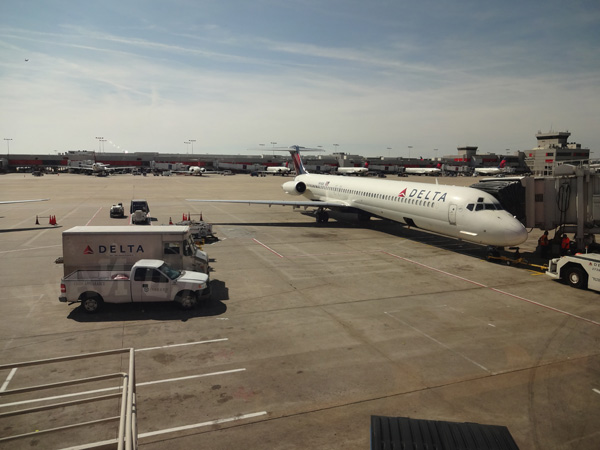
[Photo Credit to Pixabay]
On April 8th, Delta Airlines revealed intentions to reduce capacity due to sharply rising jet fuel prices, which it projects might result in additional charges of almost $2 billion (€1.85 billion).
This perspective was disclosed by the US-based carrier, indicating changes throughout its network.
Capacity, which is frequently expressed as a percentage change from previous plans, is the total number of seats available for customers throughout the flight schedule.
Rather than simply limiting the number of passengers per flight, trimming capacity refers to lowering this total seat supply, usually by reducing flights, employing smaller aircraft on routes, or modifying schedules.
The decision comes amidst a dramatic increase in jet fuel prices that is affecting airline profitability globally.
By reducing growth and streamlining operations, Delta hopes to alleviate financial pressure.
As airlines continue to grapple with the volatility of energy markets, the action underscores growing concerns throughout the aviation sector.
A more cautious approach to short-term capacity development is suggested by Delta's announcement.
Additionally, the development raises the possibility of repercussions for schedules, pricing, and overall airline competition.
Delta projects a $2 billion (€1.85 billion) rise in its cost base due to increased fuel costs.
The goal of this plan to cut capacity is to maintain high profits while bringing supply and demand closer together.
In order to counteract cost challenges, the airline is also expected to continue concentrating on operational efficiency.
As margins increase, Delta anticipates a $300 million gain from its refinery in the second quarter of 2026, up from $60 million in the first quarter.
Depending on demand patterns and route profitability, both domestic and international networks may be impacted by capacity reductions.
Airlines frequently prioritize high-yield regions, restrict schedules, and improve load factors in response to rising prices.
This could result in fewer seats being available and therefore higher ticket prices for travelers.
Delta stated that demand remains high, and the airline is taking proactive steps to safeguard its profits and cash flow, including significantly slowing capacity expansion with a downward skew until the fuel market improves.
In the past, fluctuations in fuel prices have had a significant impact on airline strategy.
Carriers frequently use cost-cutting measures such as capacity cutbacks, fleet modifications, or fuel hedging tactics when prices spike.
By emphasizing premium services and operational dependability, Delta has historically shown resiliency during comparable times and this most recent action is an extension of that strategy.
If fuel prices persist at elevated levels, other carriers in the global aviation industry might employ similar tactics.
The same macroeconomic challenges affect airlines in Europe, Asia, and North America, especially amid the current Iranian crisis.
The situation also underscores the significance of fuel-efficient aircraft, including next-generation widebody and narrowbody models.
As traditional fuel prices climb, investments in sustainability and alternative fuels have become even more critical.
Nevertheless, demand patterns remain relatively robust, particularly in the long-haul and premium travel categories.
As a result, airlines like Delta are able to modify capacity without appreciably impairing revenue performance.
The airline industry's ability to adapt will be determined in the upcoming months.

- Jason Kim / Grade 11
- Yongsan International School of Seoul