
![THE HERALD STUDENT REPORTERS [US]](/assets/images/logo_student_us.png)
![THE HERALD STUDENT REPORTERS [Canada]](/assets/images/logo_student_ca.png)

AI glasses are becoming the next major technology frontier
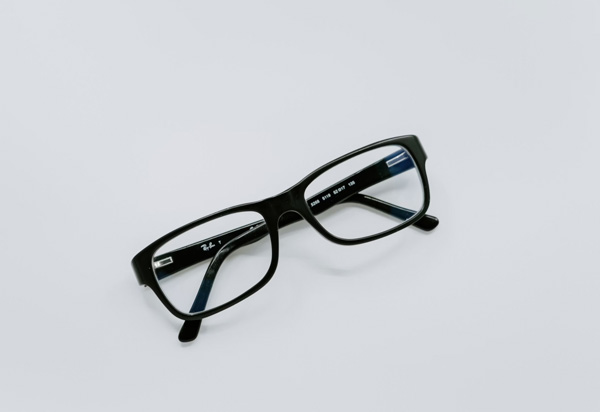
[glasses. photo credits to unsplash]
According to the McKinsey State of Fashion 2026 report, AI-integrated smart glasses are poised to experience a breakout year in 2026, emerging as the next major breakthrough in wearable devices.
‘AI glasses’ were first introduced to the world on October 17, 2023, when Ray-Ban Meta launched their first AI-integrated smart glasses.
Since then, the market has greatly expanded. According to market research firm Omdia, global AI shipments increased from 2.06 million units in 2024 to 8.7 million the very next year.
Following this growth, many other companies have started developing their own AI glasses; major technology companies like Google and Apple have confirmed development of their own smart glasses, and Samsung has confirmed the launch of theirs in 2026.
These AI-integrated glasses do not appear much different from normal glasses on the outside.
In fact, most smart glasses have round frames and slim arms, no different from ordinary glasses, making it impossible to tell the difference.
The distinction can only be felt upon wearing the glasses.
Smart-glasses feature a display screen that is directly connected to AI. Asking a question out loud or inputting commands will activate the AI, and the answer will be showcased on the display screen immediately.
Small cameras are also incorporated into the glasses. It can be used to record videos from the user’s perspective, as well as scan or take pictures of objects in front of the user. In a sense, these smart glasses are like a handy assistant.
The fact that the glasses can be voice-controlled further enhances their convenience and appeal to companies.
Unlike with smartphones, these glasses enable the user's hands to remain free as they take pictures or search for information, making the process much faster and more convenient.
Many technology companies are starting to view smart glasses as potentially the next smartphone.
The price of these smart glasses is also reasonable. Meta’s newest AI-integrated glasses start at $299, and as technology continues to develop, the price will only drop further.
With its great features and acceptable price, these smart glasses would be able to make our lives much more convenient in the foreseeable future.
However, smart glasses have not only brought benefits to our lives— they have also brought many issues concerning their usage.
The biggest emerging issue surrounds smart glasses and its role in helping students cheat on exams. Because these glasses are so difficult to tell apart from normal glasses, it has become incredibly difficult to determine whether students were cheating or not.
In South Korea, there have been two reported incidents of test-takers cheating on the Test of English for International Communication (TOEIC) test— which is widely used for language proficiency and hiring decisions— using AI-equipped smart glasses.
In Taiwan, a student attempting to pass the entrance exam for a top medical school was caught wearing smart glasses by the proctors.
As Thomas Corbin, a lecturer at Deakin University in Australia, says—”If we’re seeing a few cases being reported, we’re seeing a lot more cases not being reported”— this cheating issue seems to be becoming extremely widespread.
As such, it’s imperative that proper usage guidelines and protocols are established as AI glasses become more integrated into our daily lives.
Ultimately, AI glasses hold immense potential to benefit our lives— however, the responsibility lies with all users and developers to ensure this convenience doesn’t come at the cost of ethical integrity.

- Chloe Yeona Choi / Grade 10
- SPPS