
![THE HERALD STUDENT REPORTERS [US]](/assets/images/logo_student_us.png)
![THE HERALD STUDENT REPORTERS [Canada]](/assets/images/logo_student_ca.png)

Europe’s heatwave breaks records, and its resistance to air conditioning
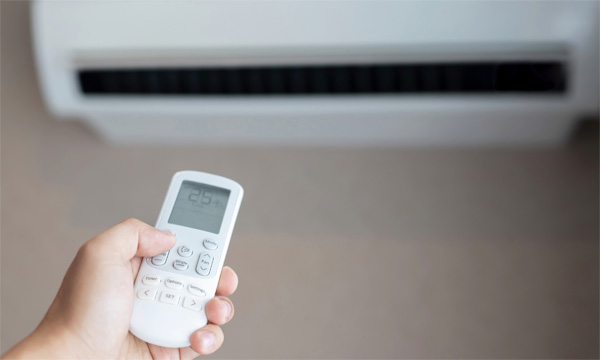
[Image of an air conditioner, Credit to Pixabay]
A severe heatwave gripping western Europe through late June has killed dozens, forced schools and major institutions to close, strained power grids across the continent, and accelerated a sharp shift in Europe’s longstanding resistance to air conditioning, according to weather agencies, governments, and industry analyses.
This heatwave is the second major heat episode to hit Europe in two months. It has been driven by a stationary “heat dome” of high pressure that pulled scorching air north from the Sahara and parked it over the western half of the continent between June 20 and June 23.
France recorded its hottest day ever on June 24, with a nationally averaged temperature of 29.8 degrees Celsius, surpassing a record set in 2019. The town of Pissos in the southwest reached 44.3 degrees Celcius and Bordeaux reached 41.1 degrees Celcius.
The national weather service Meteo-France placed 29 of the country’s 96 mainland departments under its highest “red” heat alert, and the United Kingdom confirmed its hottest June day on record, with temperature reaching approximately 38 degrees Celsius, exceeding the previous mark of 35.6 degrees Celsius set in 1976.
The heat has turned deadly across the region, with at least 40 people drowning in France since June 18 while attempting to escape the heat in unsupervised swimming areas, according to French Prime Minister Sébastien Lecornu.
“There is a tragic scourge of drownings,” Lecornu said after a crisis meeting on June 23, adding that the victims have been mostly young people who sought relief in rivers and canals.
In Spain, more than 200 deaths have been linked to the heatwave since June 22, while France has reported the closure or schedule adjustment of more than 13,000 schools, and the United Kingdom has more than 2,000.
The World Health Organization has classified the ongoing event as a public health emergency, estimating that extreme heat has claimed roughly 200,000 lives across Europe over the past four years.
Power grids have come under intense pressure as electricity demand spikes and generation capacity falters, with the United Kingdom importing electricity on June 23 at 470 pounds per megawatt-hour, more than six times its normal rate, after wind generation fell and several gas plants reduced output due to the heat.
In France, wholesale electricity prices surged past 268 euros per megawatt-hour, the highest level since August 2023, as elevated river temperatures forced some nuclear reactors to reduce output because cooling water was less effective.
The crisis has reignited debates over Europe’s historically low rate of air-conditioning ownership, which currently stands at approximately 20 percent of households, compared with around 90 percent in the United States and Japan, according to the International Energy Agency.
Cultural reluctance, high electricity costs, older housing stock unsuitable for retrofitting, and concerns over the environmental impact of cooling systems have also contributed to the gap, with some European political figures historically framing air conditioning as a luxury and a driver of further climate warming.
However, this stance appears to be shifting, with the Air Conditioning Company in the United Kingdom reporting that residential inquiries have more than tripled over the past five years, while installation crews in northern France have been pictured fitting units to homes that previously had none.
Financial markets have responded to this trend, with shares of US-based Carrier Global rising 22.5 percent year-to-date through June 25 and Japan’s Daikin Industries gaining 17 percent over the same period, as both companies reported strong growth in European cooling equipment sales.
“Climate change, urbanization in emerging markets, and tightening energy efficiency regulations are all expanding the global HVAC market,” Mizuho Securities analyst Brett Linsey said, adding that the current extreme heat is accelerating replacement cycles for older cooling equipment.
The IEA forecasts that the number of air conditioning units across the European Union will more than double to 275 million by 2050, even as the bloc continues to pursue its climate neutrality target for the same era.
Meteorologists warn that the situation is unlikely to ease in the short term, with the heat dome forecast to shift eastward and bring temperatures near 41 degrees Celsius to parts of Germany later this week. Italy has already placed 16 cities, including Rome, Milan, and Florence, under its highest-level heat alert.

- Alice Hong / Grade 11
- The Madeira School