
![THE HERALD STUDENT REPORTERS [US]](/assets/images/logo_student_us.png)
![THE HERALD STUDENT REPORTERS [Canada]](/assets/images/logo_student_ca.png)

Researchers find that brain goes through five distinct phases
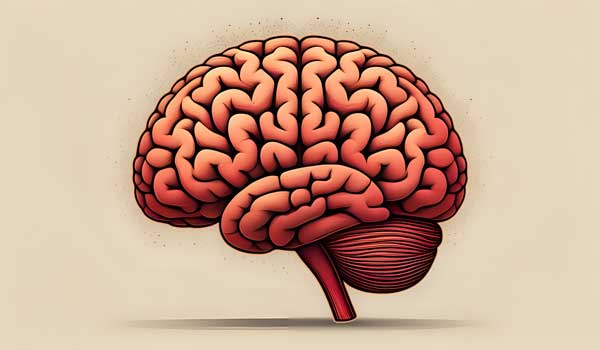
[An illustration of the human brain. Photo Credit: Pixabay]
In a study published on November 25th in the scientific journal Nature, researchers at the University of Cambridge have identified five distinct phases of brain structure as people grow, develop, and eventually deteriorate, with their brains restructuring to support various modes of thinking.
The brain goes through five distinct phases in life, marked by significant turning points occurring around ages nine, thirty-two, sixty-six, and eighty-three.
The study involved scans of almost 4,000 individuals up to the age of 90 to show the connections between their brain cells.
Research from the University of Cambridge suggests that the brain remains in the teenage stage until it peaks in the early thirties.
These findings may provide light on why the risk of dementia and mental health issues fluctuates throughout life.
From birth until death, the brain is always evolving in response to new information and experiences, but research indicates that this evolution does not follow a single, seamless pattern.
Rather, these are the five stages of the brain: Childhood: from birth to nine years of age; Adolescence: nine to thirty-two; Adulthood: ages 32 to 66; Early aging: between 66 and 83; and Late aging: starting at age 83.
During Childhood, the brain grows quickly, but it also thins down the excess synapses, connections between brain cells, that were formed at birth.
During this phase, the brain becomes less effective and instead of moving directly from point A to point B, it functions similarly to a youngster wandering through a park and going anywhere they please.
Fromthe age of nine, the brain's connections go through a phase of brutal efficiency during Adolescence, and this quickly alters and there is a huge shift as it is the most significant transition between phases of the brain.
Additionally, mental health concerns are most likely to begin at this time.
Adolescence naturally begins around the time of puberty, but the most recent research indicates that it concludes far later than previously thought.
The brain's network of neurons only becomes more effective throughout this stage, and research reveals that the brain remains in the same phase between the ages of nine and thirty-two, as brain functions peak in the early thirties.
For adulthood, the brain then enters its longest era, lasting three decades, and experiences a period of stability.
Compared to the previous phases, change is slower during this period, but there is a reversal of the gains in brain efficiency.
This aligns with the plateau of intelligence and personality that doctors notice in many people of this age.
Over the course of a person's life, the brain constantly rewires, strengthening and weakening connections; there are stages and fluctuations in this process rather than a single, consistent pattern.
Although some people would arrive at these landmarks sooner or later than others, the researchers found it remarkable how distinctly these ages stood out in the data.
Early aging starts at age 66, but the decline is gradual.
Rather, the brain's patterns of connections undergo transformation.
The organ becomes increasingly divided into areas that collaborate closely, instead of functioning as a single, cohesive whole.
This is the age at which dementia and high blood pressure, conditions that impact brain health, begin to manifest, even though the study examined healthy brains.
Late aging is the last stage at age 83, and because it was more difficult to locate healthy brains to scan, there is less data than for the other groups.
The alterations in the brain are considerably more noticeable than those associated with early aging.
Men and women were not examined separately in the study, but there will be issues like the effects of menopause.

- Sangmin Lee / Grade 11
- Chadwick International