
![THE HERALD STUDENT REPORTERS [US]](/assets/images/logo_student_us.png)
![THE HERALD STUDENT REPORTERS [Canada]](/assets/images/logo_student_ca.png)

Iran faces deepening currency crisis as rial collapses, sparking widespread protests
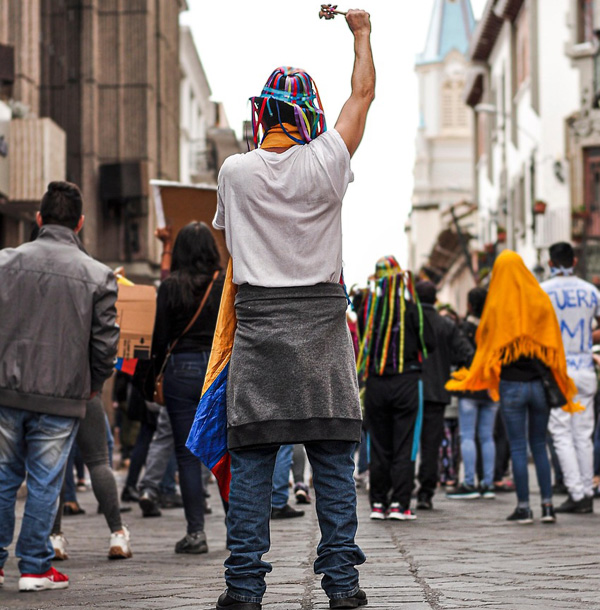
[This picture shows a protestor. Photo Credit to Pixabay]
Iran is currently in the midst of a rapidly intensifying economic crisis marked by a historic collapse of its national currency, the Iranian rial, surging inflation, and expanding public unrest.
The turmoil — emerging in late December 2025 — is widely regarded as one of the most severe economic shocks the country has faced in years and has triggered protests in major cities, raising urgent questions about economic stability and political legitimacy within the Islamic Republic.
The Iranian rial has plummeted to record lows against the U.S. dollar on the open market, with exchange rates exceeding 1.39 million rials per dollar, according to data from the foreign exchange market and official reporting.
This unprecedented depreciation reflects structural vulnerabilities in the Iranian economy exacerbated by international sanctions, persistent budget deficits, limited foreign currency inflows, and the impact of regional tensions.
Economists and international observers have noted that Iran’s currency has been under sustained pressure throughout 2025.
Currency traders in Tehran reported the rial reaching historic lows earlier in the month, with exchange rates climbing above 1.3 million rials per dollar amid ongoing uncertainty about sanctions relief and export earnings.
The depreciation of the rial has dramatically intensified inflationary pressures across the economy.
In December 2025, Iran’s annual inflation rate was reported to exceed 40 percent, with food prices and essential goods experiencing sharp increases that have strained household budgets and reduced real incomes.
The deteriorating economic conditions have evoked a strong response from Iranians, chiefly among shopkeepers, bazaar merchants, workers, and students.
Beginning on 28 December 2025, protests erupted in Tehran’s historic Grand Bazaar and have since spread to other major urban centers including Isfahan, Shiraz, Mashhad, Hamadan, and Qeshm Island.
Demonstrators have staged strikes, closed shops, and taken to the streets to demand government action to address the economic crisis.
Protesters initially focused on economic grievances but have increasingly incorporated broader political messages into their demonstrations.
Video footage and eyewitness accounts show demonstrators chanting slogans against government policies and calling for accountability over the declining standard of living.
In several cities, students and workers also joined the demonstrations, indicating a widening base of discontent.
In response to the unrest, President Masoud Pezeshkian’s administration acknowledged the legitimacy of protesters’ demands and announced a willingness to engage in dialogue.
Government officials have called for talks with protest leaders, signaling a shift toward attempted engagement rather than exclusively relying on security measures to quell dissent.
Amid the crisis, Iran’s Central Bank governor, Mohammad Reza Farzin, resigned, pending formal presidential approval.
His departure underscores the political repercussions of the economic turmoil and the pressure on government institutions to find solutions.
Farzin is expected to be succeeded by former economy minister Abdolnaser Hemmati, a seasoned economist with prior experience heading the Central Bank.
Iran’s economic woes stem from a combination of long-standing structural issues and acute external pressures.
The reimposition of U.S. and international sanctions, particularly those targeting oil exports and financial transactions, has severely curtailed foreign currency earnings and crippled access to global markets.
These sanctions, reactivated in part via mechanisms like the United Nations countermeasures in late 2025, have further exacerbated pressure on the rial and reduced economic resilience.
Analysts also point to heavy budget deficits, limited economic diversification, and reliance on energy exports as ongoing structural weaknesses.
The protests — the largest since the 2022 unrest following the death of Mahsa Amini — reflect a broader escalation of public frustration.
They underscore the interconnected nature of economic hardship and political dissent in Iran, as citizens grapple not only with financial insecurity but also perceived governance failures.
For many Iranians, the currency crisis is not an abstract financial metric but a tangible force reshaping their daily lives.
As the rial’s value erodes, families face rising costs for food, medicine, housing, and transportation — showing the human dimension of an economic crisis that shows few signs of abating.

- Joseph Shin / Grade 12 Session 11
- Valley Christian High School