
![THE HERALD STUDENT REPORTERS [US]](/assets/images/logo_student_us.png)
![THE HERALD STUDENT REPORTERS [Canada]](/assets/images/logo_student_ca.png)

Google signs landmark power deal for U.S. carbon-capture gas plant
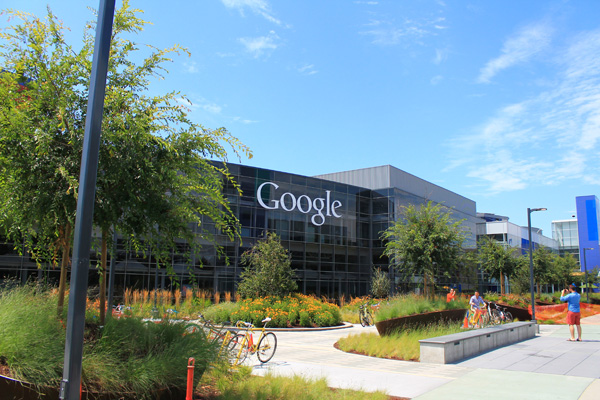
[Image of goole, Credit of Pxhere]
On October 23, 2025, Google announced that it has signed a long-term power purchase agreement (PPA) for a new natural-gas power plant equipped with carbon capture and storage (CCS) technology in Decatur, Illinois. This agreement is the first corporate offtake agreement for a CCS-enabled power facility in the United States.
The company stated the project will supply reliable power for its rapidly expanding data-center operations while significantly reducing emissions from fossil-fuel generation.
According to the announcement, the new plant-named Broadwing Energy Center—will generate more than 400 megawatts of electricity once completed.
The project is being developed by I Squared Capital, a U.S.-based infrastructure investor, and its decarbonization-focused subsidiary, Low Carbon Infrastructure (LCI).
The facility will be constructed on an existing industrial site operated by Archer Daniels Midland (ADM), which also owns nearby underground formations approved by the U.S. Environmental Protection Agency for permanent CO₂ storage.
Broadwing Energy is projected to begin commercial operations in the early 2030s.
CCS, or carbon capture and storage, is a technology that minimizes emissions from power plants by capturing carbon dioxide from exhaust gases, compressing it, and injecting it deep underground into secure geological layers.
At Broadwing, the system is designed to capture approximately 90% of the CO₂ emissions from the gas-fired plant.
In its announcement, Google stated that the PPA reflects its attempt to balance two major challenges: the surging electricity demand driven by artificial intelligence and cloud computing, and its 2030 commitment to achieve net-zero emissions across its entire value chain.
Although the company has invested heavily in solar and wind power for over a decade, it noted that the rapid rise of AI requires round-the-clock, firm power, which renewable energy alone cannot always provide.
Since 2010, Google has signed over 170 clean-energy agreements, securing more than 22 gigawatts of renewable or low-carbon electricity.
In recent years, however, the company has expanded its strategy beyond renewables to include geothermal power, advanced nuclear reactors, biomass projects, and long-duration energy storage.
Despite rising energy usage, Google managed to reduce carbon emissions from its data centers by 12% in 2024, according to its Environmental Report.
Michael Terrell, Google’s Head of Advanced Energy, emphasized that the company hopes the Broadwing partnership will accelerate innovation in the CCS sector.
He stated, “Our goal is to help bring promising new CCS solutions to the market while learning and improving quickly.
He added, “This project will help advance CO₂ capture rates, system performance, and overall economics.”
Industry leaders suggest that the deal could influence other corporations facing similar sustainability and energy-security pressures.
For instance, Meta is already exploring incorporating CCS-ready natural-gas turbines into its upcoming data-center campus in Louisiana.
A report by the carbon-management firm Carbon Direct noted that CCS-paired gas generation could offer a “practical way to balance long-term climate commitments with growing electricity demand.”
Experts also believe that Google’s involvement sends a strong market signal.
By guaranteeing a buyer for the plant’s electricity, Google reduces financial risk for developers and could encourage additional investment in large-scale CCS projects.
Analysts say this could accelerate the expansion of lower-carbon power generation in the United States, especially as demand from AI and cloud computing continues to surge.
As one of the first attempts to deploy CCS for a major U.S. power plant on a commercial scale, the Broadwing project represents a new direction in the nation’s energy transition.
Whether it sets a precedent for future facilities will depend on safe operation, public transparency, and actual climate performance once the plant begins running.
Nevertheless, Google’s decision demonstrates how major technology companies may increasingly shape the future of clean energy—not only through renewable investments but also by supporting emerging technologies that provide reliable, low-carbon power.

- Sungyoon Lee / Grade 11
- Dwight School Seoul