
![THE HERALD STUDENT REPORTERS [US]](/assets/images/logo_student_us.png)
![THE HERALD STUDENT REPORTERS [Canada]](/assets/images/logo_student_ca.png)

Michalela Benthaus is the first person to go to space in a wheelchair
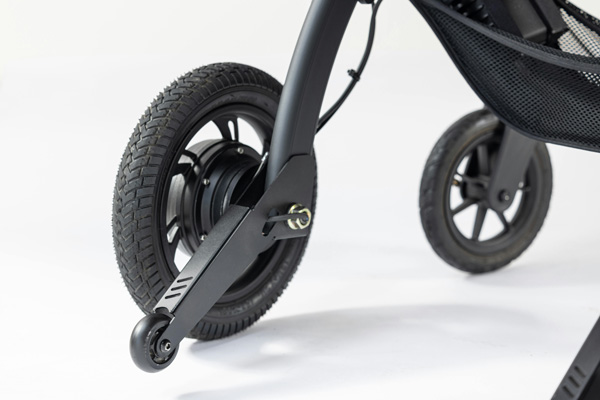
[wheelchair, Photo Credit to Pexels]
On December 20, 2025, Michaela “Michi” Benthaus made history as the first person to use a wheelchair to travel to space.
Michaela is a 33-year-old aerospace engineer from Germany.
She launched from West Texas aboard Blue Origin’s New Shepard NS-37 spacecraft.
Her mission marked a pivotal moment in making space travel possible for people with physical disabilities.
The New Shepard spacecraft is built for brief space trips, known as suborbital flights.
During the mission, the spacecraft reached about 62 miles (100 kilometers) above Earth.
This altitude, known as the Kármán line, is widely regarded as the edge of space.
Once the spacecraft reached this height, passengers were allowed to unbuckle their seatbelts and experience weightlessness for a few minutes.
They floated in the air for a few minutes due to weightlessness.
During this time, they could look out the windows and see Earth from space.
Following the weightless experience, the spacecraft began its return to Earth.
It landed safely using parachutes and touched down upright on a landing pad about two miles from the launch site.
The entire trip lasted approximately 11 minutes.
To ensure Michaela could fly safely, Blue Origin made special modifications to the spacecraft.
A transfer platform was installed to help her move from her wheelchair into her seat.
Her legs were also secured with a strap to prevent them from floating away during the weightless phase of the flight.
These accommodations allowed Michaela to fully enjoy the experience just like the other passengers.
Upon returning to Earth, Michaela described the flight as amazing. “It was the coolest experience ever, honestly,” she said.
She then offered a piece of advice to her fans, saying “I think you should never give up on your dreams.”
Since childhood, Michaela had always dreamed of becoming an astronaut.
However, in 2018, her life took a dramatic turn after a mountain biking accident caused a serious spinal cord injury.
Despite her paralysis, she refused to abandon her dreams.
Michaela continued her studies in engineering and aerospace technology.
In 2024, she was accepted into the European Space Agency’s graduate trainee program in the Netherlands.
Despite her qualifications, Michaela recognized that becoming a traditional astronaut would be very difficult.
In late 2024, she contacted Hans Koenigsmann, a retired aerospace engineer.
She asked him if someone with a physical disability like her could still become an astronaut.
Hans, believing in her potential, took it upon himself to contact Blue Origin and helped make the flight possible.
He also accompanied her on the mission.
Blue Origin did not disclose the cost of the trip, but similar space flights with other companies can cost around $600,000.
The rest of the crew included a scientist, a business leader, a mining engineer, and a software engineer.
Michaela’s flight highlights the increasing inclusivity of space travel.
The European Space Agency is also actively working to include more people with disabilities.
Through its “Fly!” program, the European Space Agency (ESA) has approved John McFall, who has a prosthetic leg, for a future mission to the International Space Station.
Although no launch date has been announced, this shows that space exploration is opening doors for more people than ever before.
Even though Michaela initially thought there was no way to achieve her dreams after her accident, she was able to accomplish them by persevering.

- Carolynn Kim / Grade 7 Session 11
- Apex Friendship Middle School