
![THE HERALD STUDENT REPORTERS [US]](/assets/images/logo_student_us.png)
![THE HERALD STUDENT REPORTERS [Canada]](/assets/images/logo_student_ca.png)

Animal testing in the UK to be phased out by the government
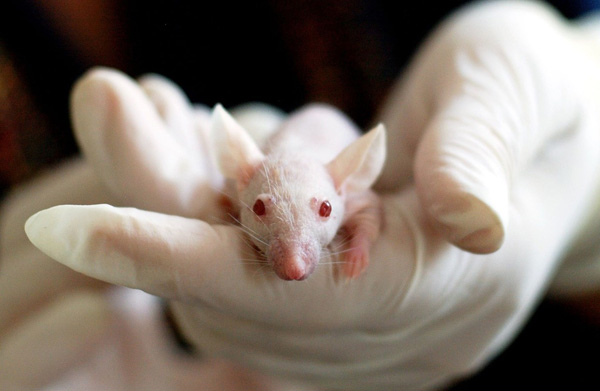
[A mouse used for animal testing. Photo Credit: Pixabay]
The UK Science Minister Lord Vallance announced on November 11th how the government intends to fulfill its manifesto promise to gradually phase out animal testing.
By the end of this year, significant safety tests will no longer require animal testing, and by 2030, at least 35% fewer dogs and non-human primates will be used in human medication testing.
In its manifesto, the Labour Party committed to collaborate with industry, civil society, and science to phase out animal testing.
Although he conceded that it would take time, Science Minister Lord Vallance told news agencies that he could foresee a period when the use of animals in science was virtually eliminated.
In 2015, the number of animal studies in the UK peaked at 4.14 million, primarily due to a significant rise in genetic alteration research, mainly on fish and mice.
However, due to the development of substitute techniques, the population had drastically decreased to 2.88 million by 2020; however, that decline has plateaued since then.
By substituting animal testing with experiments on animal tissues generated from stem cells, artificial intelligence, and computer simulations for animal experimentation, the government hopes to rekindle the rapidly declining trend.
By the end of 2025, scientists will no longer employ animals in several significant safety studies; instead, they will utilize human cells in more advanced laboratory techniques, according to the government's recently detailed plans.
By collaborating with partners, providing fresh funds for researchers, and simplifying regulations, the initiative will allow teams to safely transition to alternative approaches.
These methods include organ-on-a-chip systems that are small devices that use actual human cells to simulate how human organs function.
AI is also being increasingly utilized to analyze vast volumes of molecular data in order to forecast whether novel medications will be safe and effective for people.
Furthermore, realistic human tissue samples, from skin to liver, could be produced using 3D bioprinted tissues for testing, offering authentic settings for researching human biology and determining whether compounds are hazardous.
The plan lays out precise promises for the upcoming years, making it one of the most comprehensive in the world and providing the UK fresh chances to take the lead in finding alternatives to phase out animal testing while boosting their economy.
By the end of 2026, regulatory testing on animals to evaluate the possibility of new medicines causing skin and eye irritation and skin sensitization will be discontinued.
By 2027, it is anticipated that experiments on the potency of botox on mice will be discontinued, and adventitious agent testing of human medications, the process of identifying germs or viruses that could unintentionally contaminate medications, will only be conducted using DNA-based laboratory techniques.
Additionally, it will reduce pharmacokinetic research on dogs and non-human primates by 2030.
The National Centre for the Replacement, Refinement and Reduction of Animals in Research (NC3Rs), the first organization of its kind to successfully deliver non-animal alternatives in areas like vaccines with millions of pounds in government funding, serves as an example of how the UK has developed and adopted alternative methods.
The plan will fulfill the government's manifesto pledge to promote animal welfare by collaborating with scientists, businesses, and civil society to phase out animal testing.
It was developed by the government with close collaboration with life sciences professionals, companies, and animal advocacy organizations.

- Sangmin Lee / Grade 11
- Chadwick International