
![THE HERALD STUDENT REPORTERS [US]](/assets/images/logo_student_us.png)
![THE HERALD STUDENT REPORTERS [Canada]](/assets/images/logo_student_ca.png)

Trump says Iran talks are close to a deal
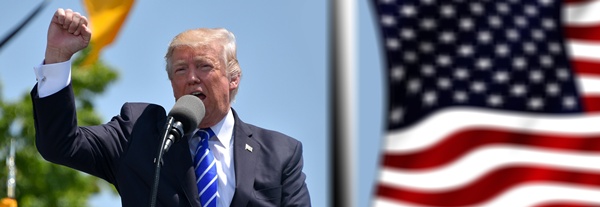
[Donald Trump. Photo Credit to Pixabay]
U.S. President Donald Trump announced Tuesday that negotiations with Iran are progressing toward a potential agreement, describing the discussions as “very serious” and suggesting that both sides may be close to a deal.
However, conflicting statements from Iranian officials have cast doubt on whether formal talks are indeed underway, underscoring the uncertainty surrounding the diplomatic effort.
Speaking to reporters at West Palm Beach International Airport in Florida before departing for Memphis, Tennessee, Trump said that the United States and Iran had reached agreements on almost all major issues, including nuclear programs.
He emphasized that negotiations were in a critical phase, stating that they are at a “very important point” in the negotiation process.
Despite Trump’s opitimistic outlook, Iranian officials have publicly denied that any direct negotiations with The United States are underway.
Iran's Foreign Ministry and state-affiliated media have maintained that no formal talks or agreements have taken place, indicating a disconnect between the two sides’ narratives.
Analysts suggest this discrepancy could reflect either indirect backchannel communications or strategic messaging by both governments, or even a combination of the two.
Trump further revealed that senior U.S. officials, including Middle East envoy Steve Witkoff and his son in law Jared Kushner, had been engaged in discussions with high ranking Iranian counterparts in recent days.
He claimed the talks had been perfectly conducted and indicated that a phone call later in the day could further advance the process.
The president also reiterated that a core component of any agreement would be Iran’s commitment not to develop nuclear weapons.
Trump emphatically stated that they will not have nuclear weapons, describing it as the first and most critical condition of a deal.
He further suggested that the United States might take direct control of Iran’s highly enriched uranium stockpile once an agreement is finalized.
Trump framed the potential deal as a historic achievement, saying that if this is completed, it could be the biggest deal of my life, while acknowledging that no outcome is guaranteed.
Beyond nuclear issues, Trump linked the negotiations to broader regional tensions, particularly concerning the Strait of Hormuz, a critical global shipping route.
He suggested that successful diplomacy could lead to a reopening of the waterway and stabilization of global oil markets, potentially even jointly managed by the United States and Iran.
Earlier this week, Trump had escalated tensions by issuing a stark warning on his social media platform that Iran’s nuclear facilities could be completely destroyed if the country failed to reopen the Strait of Hormuz within 48 hours.
The warning sparked concerns about a potential military confrontation.
However, Trump’s decision to delay any military action for five days and publicly confirm the start of negotiations has been seen as a shift toward diplomacy.
Nevertheless, questions remain regarding who exactly represents Iran in these discussions.
Trump clarified that the U.S. is not negotiating with Ayatollah Ali Khamenei, Iran’s supreme leader, or his immediate successor, but rather with other figures he described as rational and respected.
Reporters suggest that U.S. officials may have been in contact with Iranian parliamentary speaker Mohammad Bagher Ghalibaf, a figure with close ties to the Islamic Revolutionary Guard Corps.
However, Ghalibaf denied any such talks on social media, dismissing them as fake news.

- Minjo Choi / Grade 11
- BC Collegiate