
![THE HERALD STUDENT REPORTERS [US]](/assets/images/logo_student_us.png)
![THE HERALD STUDENT REPORTERS [Canada]](/assets/images/logo_student_ca.png)

Trump launches policy blitz as U.S. enters 2026 election year
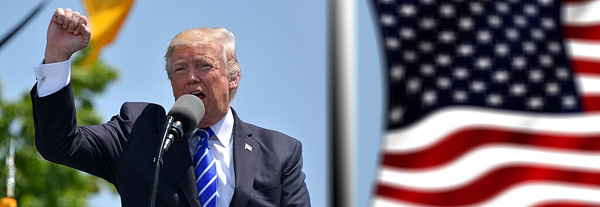
[A photo of Donald Trump. Photo credit to Wikipedia Commons]
On December 20th, Reuters reported that U.S. President Donald Trump, following his re-election earlier this year, enacted a series of domestic policies that aides described as a “policy blitz,” giving light to the administration’s priorities as the United States move closer to the 2026 election year.
The extensive policy offensive, detailed in late December, encompasses multiple executive actions, early legislative proposals, and broad agenda statements that describe the administration’s current governing direction.
According to officials, the push is intended to capitalize on the post-election momentum whilst also shaping debates before the midterm campaigning intensifies.
The areas most heavily targeted were immigration enforcement, federal regulatory authority, and economic policies.
The White House has indicated that new executive decisions will be focused around securing control of the borders, and loosening regulations governing energy production and manufacturing.
While many of the initiatives have yet to be implemented, the administration has set a clear tone going forward into the upcoming elections.
The timing of these announcements serves as a strategic maneuver, as acting quickly before congress fully turns towards the 2026 midterms, the administration can frame narratives early, forcing opponents to respond to claims backed by the White House.
Analysts note that this approach closely mirrors Trump’s earlier style of governing, which focuses on executive authority action and direct and clear messaging to voters.
Democratic lawmakers and civil society groups have expressed grave concerns for Trump’s actions, warning that such rapid policy changes can lead to deeper political polarization within the nation.
Many lawmakers have also argued that the administration’s reliance on executive power is an unlawful way to bypass Congress on several contentious issues, particularly immigration and environmental regulation.
The Reuters report echoes these concerns, with opinions from even Republican lawmakers being reported to have felt a “sense that Trump has pushed the boundaries of presidential power too far.”
Legal experts predict that some of Trump’s measures could face scrutiny in court, staging a development for new judicial battles in the coming year.
Most Republican allies, however, have applauded the move as a fulfillment of campaign promises.
Washington correspondent for RTÉ News, Sean Whelan stated that the president’s tactics “helps to disrupt opposition, and camouflage both the next moves, and the bigger strategic picture of what Mr Trump is up to.”
Trump’s supporters have praised these moves, asserting that voters have long pushed for the president to take action and make reforms, and argued that the December policy shifts as evidence of strong leadership.
International observers have also kept a close eye, as major actions within Washington often have global repercussions.
Significant shifts in trade policies, energy production, and even immigration could affect foreign markets and international relations, particularly with U.S. allies that depend on economic coordination to run.
While the December announcements largely focus on domestic issues, officials anticipate that in 2026, many international issues will be tackled.
As the United States enters 2026, the policy blitz serves as an early indicator that the political climate is poised to intensify as the midterm elections loom.
Congress will undoubtedly be fiercely contested, with 435 and 35 seats up for grabs in the House of Representatives and Senate respectively.
While 35 seats only represents around a third of the total seats of the senate, 435 seats are 100% of all of the seats in the House of Representatives, meaning that in the right circumstances, both the Democrat and Republican party could potentially secure the majority of the seats.
This could drastically alter what kind of laws and legislation the White House chooses to pass, depending on which side holds the majority.
With this in mind, it is clear that the December moves were made not only to advance policy agendas, but also to consolidate supporters and draw a clear distinction between the administration and their opposition. Whether this strategy will be effective hinges on how positively voters react to the administration’s proposals, as well as how the opposition intends to counter their ideas.

- Ian Kim / Grade 10 Session 5
- R.E. Mountain Secondary School