
![THE HERALD STUDENT REPORTERS [US]](/assets/images/logo_student_us.png)
![THE HERALD STUDENT REPORTERS [Canada]](/assets/images/logo_student_ca.png)

AI is becoming an essential part of everyday life
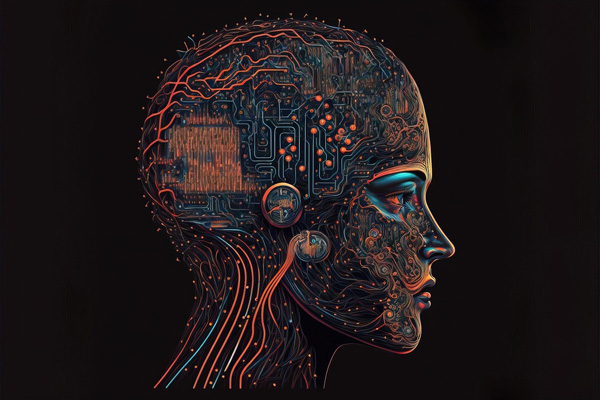
[An image of artificial intelligence being depicted as a human-like figure. Photo Credit to Pixabay]
According to the 2025 AI Index Report from Stanford University, the use of artificial intelligence has expanded dramatically, with approximately 78% of organizations reporting using AI in 2024 compared to the 55% in 2023.
For decades, artificial intelligence seemed like an invention that only belonged in science fiction, yet recent growth in AI shows that it has already become a part of millions of people’s daily lives around the world.
Many people think of self-conscious robots taking over the world when they hear the term AI, but many AI tools today are working quietly to help with everyday tasks.
Every time a person is unlocking their phone with their face, a word is suggested while texting a friend, or a recommended song pops up, AI is working behind the scenes.
One example of AI becoming increasingly common can be seen in online shopping, where companies use AI to recommend products based on a customer’s search history and personal preferences.
Streaming services also use AI in order to suggest movies and TV shows, making it easier for users to find something that matches their interests.
Navigation apps have also advanced due to AI as they are now able to predict traffic, find the fastest routes, and estimate arrival times more accurately than ever.
Students are also encountering AI in schools as well, as teachers use educational apps that offer adaptive practice lessons and exercises.
Some teachers even use technology to grade assignments or organize lesson plans quickly.
However, some people are concerned that AI could encourage cheating or make students too dependent on technology; in other words, they believe students will lose the ability to think for themselves.
These concerns are to be expected because AI should be an assistant for learning rather than a substitute for thinking.
Furthermore, businesses are beginning to use AI for more ordinary tasks such as operating customer support and improving online services.
In the healthcare sector, doctors have begun using AI to help analyze medical images and identify health issues more quickly, while trained professionals continue to make the final decisions about diagnosis and treatment.
Technology run by AI is able to adjust home temperatures, play music, schedule appointment reminders, and respond to voice commands, too.
Yet, as AI becomes more prevalent, it also raises significant questions about privacy and how personal information gets collected and used.
Many people appreciate the convenience of personalized recommendations, but they also wonder how much data companies should have access to.
Respecting privacy will become increasingly important as companies continue to use AI.
While some fear that AI will replace their jobs, others believe that it will actually create new career opportunities that will require people to cooperate with technology.
The rise in AI use shows that knowing how to use it correctly could become an essential skill, similar to how the internet became necessary in modern times.
Despite its relative novelty, nobody really knows how much it will impact the future of humanity.
Nonetheless, its purpose does not have to be to replace people; it can be used in a way that will help people learn, think, and solve problems.
From financial budgeting to translating texts, AI continues to grow; its future will depend not only on what it will be capable of, but also on how carefully people choose to use it.

- William Kim / Grade 10 Session 13
- Sunny Hills High School