
![THE HERALD STUDENT REPORTERS [US]](/assets/images/logo_student_us.png)
![THE HERALD STUDENT REPORTERS [Canada]](/assets/images/logo_student_ca.png)

A recent brain study shows that speech learning operates differently than previously believed
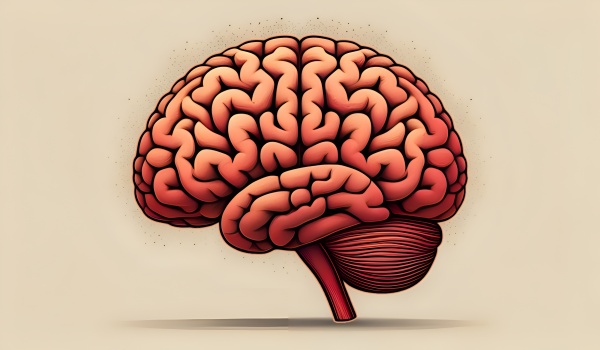
[A drawing of the brain. Photo Credit: Pixabay]
According to a recent study by researchers at McGill University and the Yale School of Medicine, published in the Proceedings of the National Academy of Sciences of the United States of America in late April, learning a new language or regaining the ability to speak may depend less on the brain's movement centers than previously thought.
The National Institute on Deafness and Other Communication Disorders in the United States provided funding for Nishan Rao, Rosalie Gendron, Timothy Manning, and David Ostry's study, titled "Sensory Basis of Speech Motor Learning and Memory.”
Based upon the new research, speech learning and memory are significantly influenced by areas that process sound and bodily experiences.
These findings suggest that future voice recognition and brain-based communication technology may be designed differently, potentially changing the knowledge of how speech is learned.
For many years, scientists have widely believed that the brain's motor regions were primarily responsible for learning and retaining the intricate movements needed for speech.
These regions regulate the facial, oral, and vocal tract movements that enable speech.
The fresh results indicate a different course, as the research indicates that auditory and somatosensory systems are essential for learning and remembering new speech patterns, rather than emphasizing motor regions as the primary engine of speech learning.
Traditionally, frontal motor regions have been considered the primary drivers of movement in sensorimotor neuroscience.
By demonstrating that human speech learning is largely sensory in origin, this study modifies that understanding.
The findings could also aid in directing the creation of new brain-speech technology.
By integrating sensory processes to enhance performance and usability, such systems may eventually aid in the restoration of communication skills following a stroke.
The researchers initially changed the subjects' speech in real time and played the altered speech back over headphones to investigate how various brain regions contribute to speech learning.
By encouraging participants to modify their speaking patterns, this method produced a type of speech motor learning.
The auditory cortex, somatosensory cortex, and motor cortex are three important brain regions involved in speaking that were momentarily disrupted by the team using transcranial magnetic stimulation (TMS), a non-invasive technique of brain stimulation.
The findings provided compelling evidence for the significance of sensory processing as participants demonstrated noticeably worse recollection of the speech gestures they had acquired when activity in either the auditory cortex or the somatosensory cortex was disturbed.
Interestingly, disrupting the motor cortex had minimal impact on retention.
The research casts doubt on the notion that new speech memories are solely dependent on modifications to the brain's motor regions.
Rather, it emphasizes the significance of modifications in auditory and somatosensory brain regions in determining how humans acquire speech.
The study is part of a broader endeavor to comprehend how learning and long-term memory are influenced by plasticity in the brain's sensory systems.
Future research will concentrate on pinpointing the precise brain circuits responsible for learning and examining sensory-based therapies for movement problems.
Applications for speech recovery and stroke rehabilitation are of special interest to the researchers.

- Hyeonji Nam / Grade 11
- Chadwick International