
![THE HERALD STUDENT REPORTERS [US]](/assets/images/logo_student_us.png)
![THE HERALD STUDENT REPORTERS [Canada]](/assets/images/logo_student_ca.png)

Satellite surge raises new fears for space telescopes and orbital safety
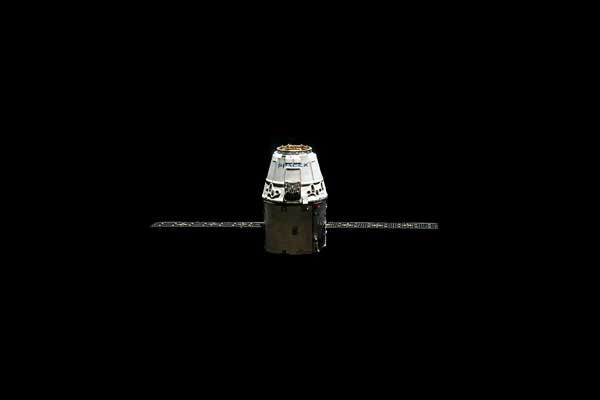
[A spacecraft in space. Photo credit to Pixabay]
Recent NASA-supported research shows that commercial satellites are now appearing in images captured by major observatories, including the Hubble Space Telescope, which has operated for over three decades.
A rapid surge in satellites orbiting Earth is prompting renewed concern among scientists, who warn that megaconstellations pose significant challenges to space-based astronomy and environmental stability.
Scientists involved in the analysis report that streak contamination has increased consistently as satellite deployment rates accelerate across low-Earth orbit.
The findings highlight that even telescopes operating far above atmospheric disturbance can no longer rely on uninterrupted observational windows due to the brightness and density of new satellite fleets.
Concerns extend beyond a single mission.
A separate study published in Nature concluded that the rapid growth of megaconstellations represents a long-term hazard to future astronomical missions, particularly those requiring deep, wide-field imaging.
Researchers found that reflective satellite surfaces intensify scattered light, creating interference patterns that complicate data calibration and reduce the accuracy of sensitive detectors.
The Nature study noted that next-generation commercial satellites, which may feature larger communication panels and brighter materials, could further elevate risks to survey operations and reduce the efficiency of sky-monitoring missions.
Astronomers warn that these disruptions may lead to more frequent scheduling conflicts, a higher need for correction algorithms, and potentially the loss of important observational opportunities.
Environmental scientists are raising parallel concerns about atmospheric impacts linked to both satellite launches and re-entry events.
Yale Environment 360 reports that satellite burn-up in the upper atmosphere releases alumina particles and other combustion byproducts capable of altering ozone chemistry and affecting heat distribution at high altitudes.
According to the analysis, growing satellite turnover rates could impose new stressors on atmospheric conditions if re-entry volumes climb alongside new launch activity.
Researchers warn that these chemical changes may accumulate over time, forming a feedback loop in which increased orbital traffic contributes to environmental instability far beyond the immediate vicinity of Earth’s surface.
Orbital safety is also becoming an increasing concern.
According to Smithsonian Magazine, decades of accumulated metallic fragments, inactive satellites, and collision-generated debris have created a congested field that heightens the possibility of chain-reaction impacts.
Scientists tracking orbital debris have identified thousands of large objects and millions of smaller particles, many too small to be monitored yet still capable of damaging spacecraft.
Models show that congestion in low-Earth orbit could reach a critical point if satellite constellations continue to expand without coordinated mitigation strategies.
Space agencies warn that uncontrolled growth may force commercial and scientific operators to devote more time and fuel to collision avoidance maneuvers, raising operational costs and shortening mission lifespans.
The combined findings indicate that satellite expansion is reshaping Earth’s orbital environment faster than existing regulations can respond.
Scientists argue that current policies fail to adequately address issues such as reflective brightness standards, coordinated launch intervals, or consistent debris-reduction requirements across operators.
Environmental advocates are pushing for stricter assessments of rocket emissions and spacecraft materials to limit chemical impacts during launch and atmospheric burn-up.
Specialists in orbital safety emphasize the need for expanded debris-removal efforts and updated international regulations designed to prevent overcrowding in key satellite corridors.
Across all studies, researchers underscore that the sustainability of Earth’s orbit depends on balancing commercial growth with safeguards for astronomy, environmental stability, and long-term mission security.

- Yeojun Jung / Grade 10
- Chadwick International School