
![THE HERALD STUDENT REPORTERS [US]](/assets/images/logo_student_us.png)
![THE HERALD STUDENT REPORTERS [Canada]](/assets/images/logo_student_ca.png)

U.S. imposes 50% tariffs on $20 billion in Canadian goods after trade talks collapse
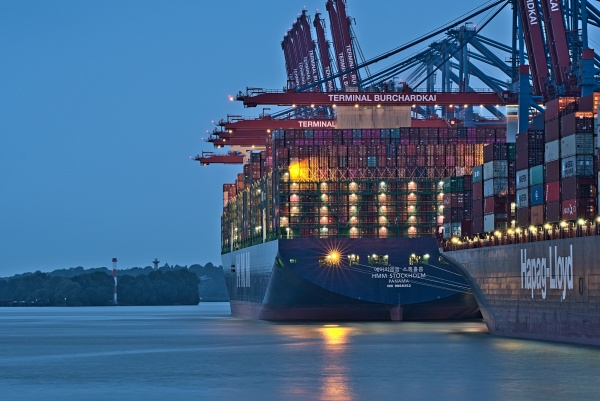
[Trade. Photo Credit to Pixabay]
On Saturday, August 22, the United States imposed 50% tariffs on Canadian products worth roughly $20 billion (USD) after negotiations between the two governments failed to reach an agreement by the midnight deadline.
The tariffs, announced on July 20, 2026, were formalized through three proclamations signed by President Donald Trump, scheduled to take effect starting on August 19th.
Just hours before the deadline, President Trump postponed the tariffs for three days following a conversation with Canadian Prime Minister Mark Carney, allowing negotiations to continue.
During that brief extension, discussion centered on reducing U.S. tariffs for Canadian autos to 15% and decreasing certain steel and aluminum tariffs to 25%, subject to a quota.
On the evening of August 21, negotiations broke down, and the Office of the U.S. Trade Representative was unable to finalize an agreement. As a result, the tariffs took effect at 12:01 a.m. Eastern Time on August 22.
Issued under Section 338 of the Tariff Act of 1930, these proclamations grant the president authority to impose tariffs up to 50% on goods from countries deemed to discriminate against U.S. commerce.
Section 338 had never been invoked by a U.S. president prior to this, requires no investigation before tariffs are imposed, and doesn’t set limits on the duration of the tariffs.
Its significance in the current dispute stems from the fact that it allows tariffs to apply to goods that would otherwise be protected under the Canada-United States-Mexico Agreement, unlike the earlier U.S. measures that exempted CUSMA-compliant products.
According to the White House, the tariffs imposed were a response to Canada’s treatment of U.S. exports, specifically in the dairy, alcohol, and automotive sectors.
Even though the reasoning behind the imposition of the tariffs was due to these three sectors, the tariffs will impact goods from a range of manufactured, industrial, and consumer products.
Products like hockey sticks and tongue depressors are among the affected items, with the tariffs covering around 5% of annual Canadian shipments to the United States
However, energy, potash, or products already subject to the Section 232 tariffs, which cover goods like steel, aluminum, and copper, remain unaffected by this tariff policy.
In response to reporters, Jamieson Greer, U.S. Trade Representative, said Canada “declined to finalize the trade deal” under terms agreed upon earlier that week, presenting new demands and reversing prior commitments.
Carney said the last-minute changes to the U.S. terms raised questions about the reliability of any agreement, and stated that Canada would match the tariffs "dollar for dollar."
On August 22, Carney subsequently announced that Canada's retaliatory tariffs would take effect on September 8th.
U.S. Customs and Border Protection issued a bulletin to businesses on Friday, informing them that officers would enforce the new rates immediately once the deadline expired.
The two nations traded over $880 billion in goods and services the previous year, with nearly 72% of Canadian goods exports being sent to the United States.
This dispute follows other recent U.S. trade policies on Canada, including 10% tariffs imposed on July 24 under Section 301 of the Trade Act of 1974, after an investigation into forced labor in supply chains by the U.S. Trade Representative.
The Section 301 tariffs were implemented following a February 2026 Supreme Court ruling that found the International Emergency Economic Powers Act, or IEEPA, did not authorize the President to impose tariffs.
Following that ruling, the administration temporarily imposed tariffs under Section 122 of the Trade Act of 1974, which allows such measures for up to 150 days.
As that 150-day period neared its expiration, the administration moved to Section 301 and other trade authorities to maintain or introduce tariffs on Canadian goods.
Trade lawyers have noted that the use of Section 338 raises legal questions that could be challenged in U.S. courts.
As of August 25, there are no further negotiations between the two governments scheduled.

- Minsung Choi / Grade 12
- Shekou International School