
![THE HERALD STUDENT REPORTERS [US]](/assets/images/logo_student_us.png)
![THE HERALD STUDENT REPORTERS [Canada]](/assets/images/logo_student_ca.png)

A hotter planet is making wildfires more dangerous
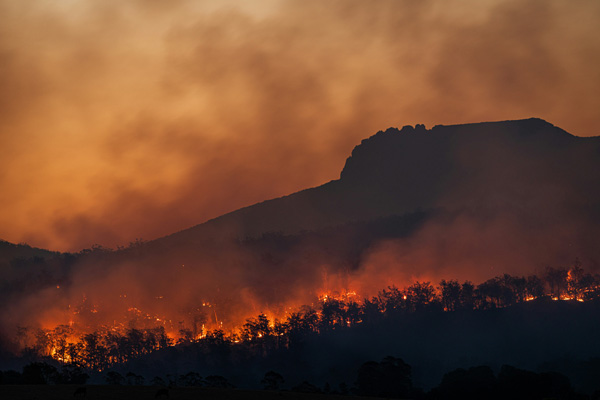
[Wildfire burning across mountains. Photo Credit to Unsplash]
Hundreds of wildfires raged across Canada in August 2026, after more than 4.1 million hectares of land had burned and thousands of residents had been forced to evacuate their homes.
The most heavily affected areas include Ontario, Manitoba, British Columbia, Saskatchewan, and Northwest Territories.
The ongoing fires have renewed attention on how rising temperatures may be contributing to more severe wildfire seasons.
Rising global temperatures and increasingly hot, dry conditions are major contributing factors to the growing frequency and severity of wildfires by creating a warmer and drier environment.
NASA’s wildfire expert, Liz Hoy, supports this by stating, “we are seeing increases in the intensity and the severity, and what's really driving this change is we are seeing a lot of changes in our climate.”
According to NASA, the Earth’s average surface temperature in 2025 reached 1.19 degrees Celsius above the 1951 to 1980 average.
Simultaneously, carbon emissions produced from wildfires increased by 60% globally between 2001 and 2023.
Together, these factors can contribute to a climate feedback loop, creating conditions that can increase the risk and severity of wildfires.
Burning fossil fuels causes long-term global warming, while severe wildfires release stored carbon and reduce forests’ ability to absorb carbon from the atmosphere.
This was clearly seen in 2023 when scientists found that wildfires across Canada released approximately 640 million metric tons of carbon, which is equivalent to the amount of carbon a country can emit from fossil fuels in an entire year.
These changes can have increasingly severe consequences for ecosystems and communities worldwide.
When an intense wildfire occurs, trees that have grown for hundreds of years collapse and burn within hours, causing widespread destruction to the surrounding environment.
In forest ecosystems where there are trees, grass, leaves, and other flammable fuels all over, even a small fire can quickly spread and develop into a large wildfire.
This leads to a greater and more harmful impact on the environment, communities, and natural habitats.
They can instantly take away the lives of all different kinds of animals and plants, and, in some cases, completely destroy their habitats.
Not only do wildfires destroy animals’ habitats, but they also have the power to burn down and damage buildings, structures, and homes.
There is simply no way to fully recover when a structure is burned down, and it is now a reality that is becoming more common as wildfires continue to threaten communities across the world.
Moreover, wildfire smoke contains harmful gases and chemicals that can be inhaled, allowing them to enter the body and reach the lungs.
Exposure to this smoke can cause breathing difficulties and increase the risk of serious health problems, including heart attacks and strokes.
Today, countless wildfires continue to burn across the world, with climate change playing a major role in their increasing frequency and intensity.
Ultimately, as global temperatures continue to rise, wildfires are becoming increasingly more dangerous, causing significant damage to ecosystems, communities, and the environment worldwide.

- Raina Lee / Grade 9 Session 8
- Abbey Park High School