
![THE HERALD STUDENT REPORTERS [US]](/assets/images/logo_student_us.png)
![THE HERALD STUDENT REPORTERS [Canada]](/assets/images/logo_student_ca.png)

Dismissal of chief ICC prosecutor brings questions to internal credibility
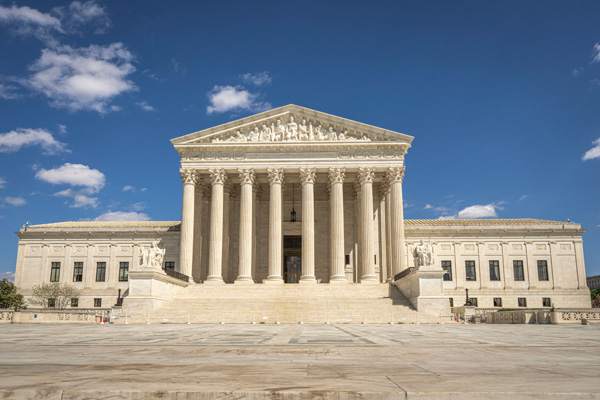
[United States Supreme Court. Photo Credit to Pexels]
On July 24, 2026, the International Criminal Court removed its chief prosecutor, Karim Khan, for the first time in its 24-year history due to findings of serious misconduct, marking an unprecedented moment for the institution.
This marked the first time a chief prosecutor had ever been removed from office since the ICC’s establishment in 2002.
The decision was made by the court’s 125-member Assembly of States Parties during a special session at the United Nations headquarters in New York.
According to the Assembly’s official announcement, member states voted by secret ballot to dismiss Khan, with 82 states in favor, 13 opposed, and 15 abstaining.
The remaining 15 of the 125 member states did not cast ballots, as they were either absent from the special session or chose not to participate in the vote.
Under Article 46 of the Rome Statute, the removal of a Prosecutor requires “an absolute majority of the States Parties, meaning at least 63 affirmative votes out of all 125, not just those present.
The 82 votes in favor exceeded this threshold, making the dismissal legally permissible and binding regardless of abstentions or absences.
According to Reuters, the vote followed a 20-month investigation into allegations of sexual misconduct involving a junior staff member in Khan’s office.
The Assembly found that Khan had committed “serious misconduct and a serious breach of duty under Article 46 of the Rome Statute”, the court’s founding treaty.
The decision abruptly ended Khan’s tenure five years into the nine-year term to which he was elected in 2021.
The allegations against Khan first surfaced in early 2024, when a female staff member alleged that Khan had coerced her into non-consensual sexual conduct.
According to the Associated Press, a United Nations Office of Internal Oversight Services Investigation concluded that Khan had engaged in “nonconsensual sexual contact with [the aide] in his office, at his private residence, and whilst on mission.”
The U.N. Office of Internal Oversight Services found evidence to support the allegation.
However, according to an article from The Guardian, a separate judge panel had previously stated that the evidence did not establish misconduct “beyond a reasonable doubt” under the ICC’s internal legal framework.
These conflicting findings reflect different proceedings with distinct standards.
The U.N. investigation used an administrative threshold of “sufficient evidence,” while the judicial panel utilized the higher criminal standard of “beyond a reasonable doubt.”
The Assembly’s Article 46 vote was an institutional disciplinary proceeding, and only required a finding of “serious misconduct” by an absolute majority.
Throughout the investigation, Khan has consistently denied all allegations.
According to his legal team’s statements to the Associated Press, Khan “firmly maintains that he did not engage in any inappropriate conduct toward the complainant, whether sexual or otherwise” and “categorically denies” these claims.
The removal comes at a particularly sensitive moment for the ICC, which has faced intense political pressure from multiple governments over its investigations into alleged war crimes in Gaza, Ukraine, and other conflict zones.
The court now faces the task of appointing an interim prosecutor while member states deliberate long-term leadership options.
The dismissal itself has raised questions about the ICC’s institutional stability and its ability to pursue accountability for genocide, war crimes, and crimes against humanity.
Critics and legal experts also fear that the scandal has further eroded the ICC’s credibility.
Mark Ellis, an executive director of the International Bar Association, stated that “the Khan situation is a separate but very significant part of the overall perception of the court’s credibility,” adding that the allegations arrived while the court was already “in a precarious state”.
The ICC’s credibility crisis threatens the confidence of victims of war crimes and genocide who rely on the court as their last method to obtain justice.
The United Nations affirms that the ICC remains “a critical cog in the international justice system” that has “brought protection and relief to millions of people,” particularly in conflict zones where domestic legal systems have collapsed.
For communities in Ukraine, Gaza, Sudan, and Myanmar, which are currently under ICC investigation, this leadership scandal risks reinforcing perceptions that international justice institutions are vulnerable to internal political pressure.
This raises concerns that it may discourage victims and witnesses from coming forward with testimony in the future.
The removal of Karim Khan serves as a case study of how international institutions manage internal accountability and maintain international credibility.
The long-term impact on the ICC’s reputation and ability to carry out its mandate remains uncertain.

- Chaewon Lee / Grade 11
- Seoul Foreign School