
![THE HERALD STUDENT REPORTERS [US]](/assets/images/logo_student_us.png)
![THE HERALD STUDENT REPORTERS [Canada]](/assets/images/logo_student_ca.png)

U.S. reduces the recommended number of childhood vaccines
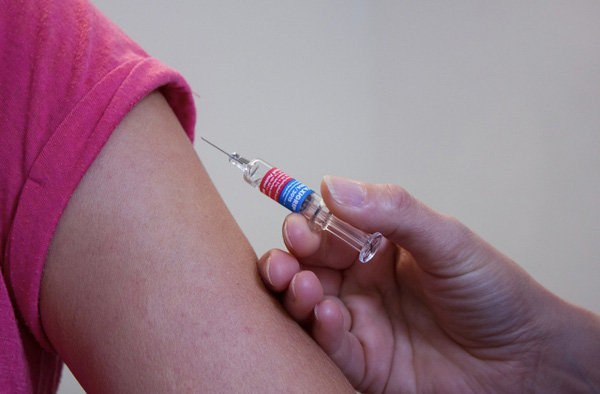
[A child receives a vaccination. Photo Credit: Pixabay]
On Monday January 5th, U.S. federal health officials announced significant changes to the recommended vaccination schedule for children across America, reducing the number of diseases that routine vaccinations can prevent from 17 to 11.
The Centers for Disease Control and Prevention's (CDC) interim director, Jim O'Neill, immediately revised the agency's immunization schedule to reflect the modifications.
Under the updated CDC guidelines, all children are expected to receive vaccinations against certain diseases, including whooping cough, polio, and measles.
However, only specific high-risk groups will be advised to receive vaccinations against six additional illnesses: hepatitis A, hepatitis B, meningococcal disease, rotavirus, influenza, and respiratory syncytial virus, which is the primary cause of hospitalization in American infants.
Robert F. Kennedy Jr., the health secretary, has long worked to reduce the number of vaccinations given to American children, and this announcement marks a dramatic departure in federal vaccine policy and possibly the biggest change in public health practice to date.
While the power to require vaccines rests with the states, not the federal government, state regulations are significantly influenced by C.D.C. recommendations.
The comprehensive and thorough evidence-based procedure that has supported vaccine recommendations in the country for decades is being circumvented by the new schedule.
Prior to making recommendations, a federal panel of impartial advisors usually examined scientific facts for each new vaccination, as well as when and how it should be administered to children.
The new guidelines were praised by US President Donald Trump, who stated that the change was based upon the gold standard of science.
The broad changes to the vaccine schedule drew sharp criticism from public health professionals, who claimed that neither the evidence nor the opinions of vaccine specialists were considered by federal officials.
Former members of the federal vaccine committee voiced concerns, stating that a sudden overhaul of the whole children vaccination schedule would be concerning, needless, and dangerous for children's health in the country.
The health officials' assertion that the action would boost immunization rates and boost vaccine trust was also contested by the former members.
They cautioned that it will have the opposite effect because parents are already concerned about the safety of vaccines due to press reports, which will lead to more confusion and a decline in vaccine uptake.
Vaccination rates have already been steadily declining due to mistrust of vaccines, and preventable diseases such as whooping cough and pertussis are on the rise.
In 2025, the U.S. reported more measles cases than in any other year since 1993, raising concerns that the nation may lose its official measles elimination status, which it has maintained since 2000.
Citing Denmark, Germany, and Japan as examples, President Trump instructed Mr. Kennedy on December 5th to align the U.S. immunization schedule with those of other wealthy nations.
U.S. health officials claim that after comparing the U.S. to 20 countries, including the UK, Canada, Denmark, and Australia, they discovered that the US was a global outlier in terms of the quantity of doses and diseases covered.
Denmark's recommendation against ten diseases was offered as an example for the United States; however, the American Academy of Pediatrics took issue with the comparison, highlighting that the population, public health system, and illness risk of Denmark are very different from those of America.

- Sian Choi / Grade 11
- Yongsan International School of Seoul