
![THE HERALD STUDENT REPORTERS [US]](/assets/images/logo_student_us.png)
![THE HERALD STUDENT REPORTERS [Canada]](/assets/images/logo_student_ca.png)

Severe snowstorm strikes North America, causing a widespread disruption
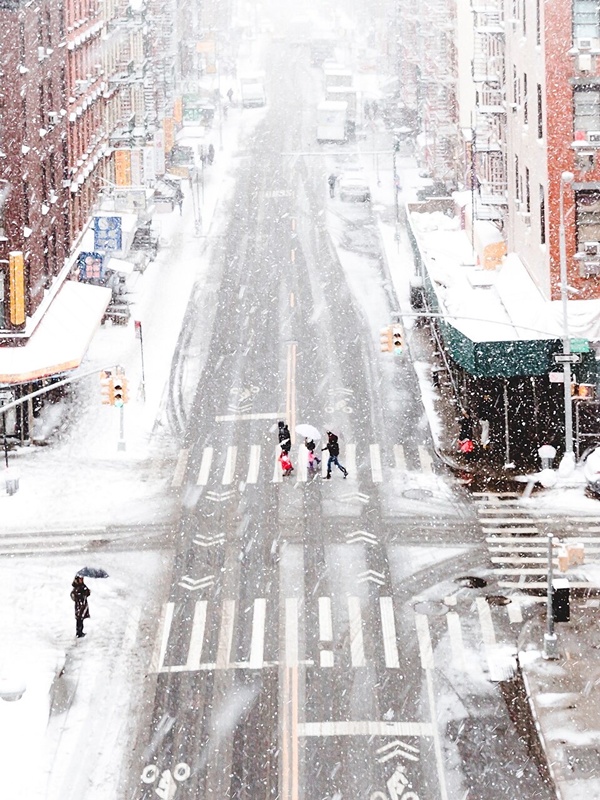
[Snowstorm in New York, Photo Credit to Wikimedia commons]
A powerful winter storm swept across the United States and Eastern Canada on Sunday, bringing a record-breaking snowfall, dangerously low temperatures, and widespread disruption to transportation and daily life.
At Toronto Pearson International Airport, 46cm (18.1 inches) of snow fell in just 24 hours, marking the highest single day total since records began in 1937.
“It is a unique storm in the sense that it is so widespread," meteorologist Allison Santorelli told the weather service in a phone interview.
She further explained, "It was affecting areas all the way from New Mexico, Texas, all the way into New England, so we’re talking like a 2,000-mile [3,200-kilometre] spread."
With heavy snowfall over such a wide area, its impact was also severe.
At least 29 people have died, including several inattentional accidents caused by carelessness.
Not only the immediate disruptions and inconvenience such as the closure of highways and roads, but the economic losses are also significant.
Airline companies are suffering both financially and operationally.
Flightware.com shares that more than 10,000 flights in the US had already been cancelled on Sunday and another 8,000 have been delayed.
This continuing danger persists even after the snow stops falling.
The widespread power outrages have left more than 840,000 people without electricity.
Despite the crews’ efforts to restore power, Oxford Utilities reported that “trees are actively snapping and falling around linemen while they are in the bucket trucks.”
They further added, “We simply cannot clear the lines faster than the limbs are falling.”
Meteorologist Santorelli explained, "Behind the storm, it’s just going to get bitterly cold across basically the entirety of the eastern two-thirds of the nation, east of the Rockies. That means the ice and snow won’t melt as fast, which could hinder some efforts to restore power and other infrastructure."
Meteorologists say this winter storm was caused by the warm Arctic waters and cold continental land combining to stretch the dreaded polar vortex.
The Polar Vortex is a ribbon of quickly moving air through high-altitude that traps cold air as it circles the Arctic region.
Scientists also note that climate change contributes to these conditions.
Specifically, the warmer Arctic is causing sea ice in that region to shrink faster than other places.
In addition, moisture streaming north from the Gulf of Mexico collided with a massive Arctic cold air mass pushing down from Canada, creating the conditions for heavy precipitation across a 2,000-mile corridor extending from the Southwest to the Northeast.
Federal and state governments declared states of emergency and deployed large-scale snow removal equipment.
Emergency responders are working tirelessly to rescue stranded residents, provide medical assistance, and operate temporary shelters.
According to the American Red Cross, nearly 1,500 trained disaster workers and their partners are responding in person and virtually across 20 states, opening and supporting more than 230 overnight shelters where over 4,000 people spent Monday night.
U.S. Department of Homeland Security’s Secretary Kristi Noem stated, "We have utility crews that are working to restore that as quick as possible."
The extreme cold and icy conditions are expected to persist in the coming days, and the authorities warn people to stay safe.

- Delci Lee / Grade 11 Session 4
- Kitsilano Secondary School