
![THE HERALD STUDENT REPORTERS [US]](/assets/images/logo_student_us.png)
![THE HERALD STUDENT REPORTERS [Canada]](/assets/images/logo_student_ca.png)

AI translation can connect languages, but may also leave some behind
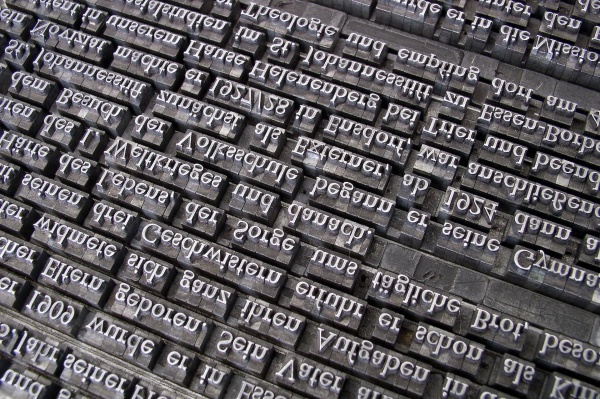
[Writing, Photo Credit to Pixabay]
Google's June 9, 2026 release of Gemini 3.5 Live Translate has brought renewed attention to a fundamental question about AI translation: can these tools connect people across borders while also protecting languages with less digital data?
The timing of this development is critical as UNESCO's Global Roadmap for Multilingualism in the Digital Era advocates for language technologies, including machine translation, to strengthen the digital presence of all languages, including low-resource and endangered languages.
For many students, travelers and immigrants, AI translation has become a useful part of their everyday life.
With just a smartphone, people can translate menus, signs, school notices, and online information within seconds.
This technology can speed up communication and help people feel less isolated in a new country.
For learners in schools, workplaces and new countries, translation tools can also help them understand homework, notices and online information while they are still building their language skills.
For people who live or study in a language environment different from the one they use at home, AI translation can sometimes feel like a bridge between cultures.
However, this bridge is not equally sturdy for every language.
Because of this, the primary focus of the debate is whether AI translation can reduce the digital gap for smaller languages or make it wider.
AI translation systems generally perform better for high-resource languages that have large amounts of reliable digital and parallel text.
Google Research has acknowledged that translation quality for under-resourced languages still lags far behind that of high-resource languages.
For languages with fewer digital resources, the results can be less accurate, less natural or even misleading.
Researchers often describe these as low-resource languages because they have limited reliable digital text, speech recordings or parallel translations for AI models to learn from.
Google Research points out that data scarcity and model limitations are two major bottlenecks for building translation models for a wide range of languages.
This is a serious issue because language is not only a mere tool for communication.
Language carries culture, history, humor, emotion, and identity.
When an AI system translates only the basic meaning of words, it may miss the deeper cultural meaning behind them.
Idioms, polite expressions and local sayings are often difficult to translate directly.
A phrase that sounds warm and respectful in one language may sound flat or strange in another language after machine translation.
This means that AI translation can sometimes help people understand information, but it may not fully help them understand the culture nuance of the language.
The problem becomes more pronounced when considering endangered and Indigenous languages.
According to UNESCO, at least 40 percent of the world's estimated 7,000 languages are endangered.
UNESCO's 2024 article cites the 7,000-language figure as an estimate of languages spoken in the world, not as an exact, fixed number.
UNESCO's Language Vitality and Endangerment framework states that endangerment is judged through several factors, including whether a language is passed from one generation to the next and whether it is used in different parts of daily life.
UNESCO also reports that, on average, a language disappears every two weeks, taking cultural and intellectual heritage with it.
According to UNESCO, a language moves toward extinction when speakers stop using it across everyday domains and no longer pass it on to younger generations.
If these languages are not well represented online, AI systems may not be able to learn them effectively.
As a result, speakers of smaller languages may have fewer digital tools, fewer educational resources, and fewer chances to use their language in modern technology.
Some technology companies are trying to solve this problem.
In 2024, Google announced that it was adding 110 new languages to Google Translate with the help of AI.
Google said the expansion would support more than 614 million speakers, including those who speak some Indigenous and low-resource languages.
In June 2026, Google also announced Gemini 3.5 Live Translate for more than 70 languages, showing how quickly AI translation is advancing from text to real-time speech translation.
Meta has also developed a project called No Language Left Behind, which aims to improve translation for 200 languages, including low-resource languages such as Asturian, Luganda, and Urdu.
These projects demonstrate that AI can be used to support linguistic diversity if developed carefully.
However, adding more languages to translation tools is only one part of the solution.
AI systems need high-quality data, which should be collected from real speakers, local communities and language experts.
Without this, AI may repeat mistakes or create translations that do not reflect the way people actually speak.
Another concern is the risk that people may depend too much on AI translation.
If students use translation tools for every sentence, they may lose motivation to learn the language deeply.
Learning a language is not only about getting the correct meaning quickly.
It is also about understanding how people think, express feelings, and build relationships.
AI translation should therefore be used as a support tool, not as a replacement for language learning.
Schools can help students use translation tools wisely by teaching them to verify important translations and compare them with human explanations.
Governments and technology companies can also support smaller languages by investing in digital dictionaries, speech recordings, and community-led language projects.
The future of AI translation should not solely focus on speed and convenience.
It should also be about protecting the many voices that make the world culturally rich.
AI can help people understand one another, but it must be developed in a way that respects every language, not only the most dominant ones.

- Suh Hannah / Grade 11
- USIS