
![THE HERALD STUDENT REPORTERS [US]](/assets/images/logo_student_us.png)
![THE HERALD STUDENT REPORTERS [Canada]](/assets/images/logo_student_ca.png)

New technologies aim to replace animal testing in scientific research
[Pills, Credit to Pixabay]
In March 2026, CNN reported that emerging tools, such as lab-grown human tissues, computer simulations, and artificial intelligence, are reshaping how drugs are developed and evaluated.
The growing technological innovation is transforming the future of biomedical research, with scientists increasingly seeking alternatives that could reduce and further replace the use of animals in testing.
For decades, animal testing has been an essential part of medical research, used to assess the safety and effectiveness of new treatments, but scientists have recognized its limitations.
Animal models do not always replicate human biology accurately, and this often leads to failures when drugs move into human clinical trials.
Now, a new generation of human-relevant technologies is emerging, including organ-on-a-chip systems, which mimic the structure and function of human organs using living cells, and organoids, which are miniature lab-grown versions of tissues.
These innovations enable researchers to observe how human cells respond to drugs in a controlled environment, potentially providing more accurate results than traditional animal testing.
Artificial Intelligence is also playing a significant role by analyzing vast datasets.
AI models can predict how drugs will behave in the human body, including their toxicity and effectiveness.
This approach not only accelerates the research process significantly but also reduces costs.
Regulatory agencies are increasingly backing this transition.
The U.S. Food and Drug Administration (FDA) has introduced new guidelines encouraging the use of these alternative methods and is working to phase out certain animal testing requirements.
They stated that the goal of it is to make drug development faster, cheaper, and more ethical.
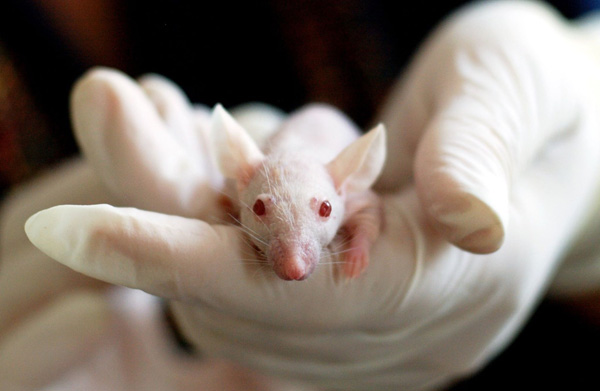
Ethical concerns have been a major driving factor behind these changes, as millions of animals, including mice, rabbits, and primates, are used in labs each year and experience significant distress.
The search for alternatives reflects the scientific principle of the “Three Rs,” which includes replacement, reduction, and refinement of animal use.
Internationally, the shift from animal testing is also gaining traction, particularly in countries across Europe and Asia that are investing in similar technologies and updating regulations to encourage non-animal methods.
Organizations such as the European Union have already implemented restrictions on animal testing for cosmetics, and many countries are following suit.
Despite the development of these technologies, experts caution that animal testing is unlikely to disappear completely in the near future due to the extremely complex biological processes that make it hard to fully replicate with current models.
Also, further validation is required to ensure the alternative methods that could enhance the reliability and safety.
Governments, researchers, and pharmaceutical companies are investing heavily in these new technologies, signaling a broader transformation in how science is conducted.
If successfully developed, these innovations could significantly reduce animal suffering and lead to more effective treatments for humans.
However, increased funding and standardized validation processes will be crucial to ensure that these new methods can be widely accepted.
Public awareness continues to grow, and consumer and advocacy pressure may also boost the transition from animal testing.
As technology continues to advance, the future of medical research may rely less on animal testing and more on methods that directly reflect human biology, which indicates a significant shift in both science and ethics.

- Yezi Jang / Grade 11
- Asia American International Academy