
![THE HERALD STUDENT REPORTERS [US]](/assets/images/logo_student_us.png)
![THE HERALD STUDENT REPORTERS [Canada]](/assets/images/logo_student_ca.png)

Rising temperatures at the 2026 Winter Paralympics highlight concerns over athlete safety and environmental impact
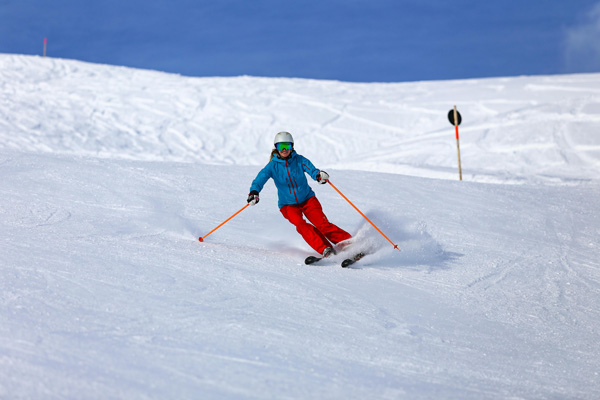
[Athlete Ski photo. source_pexels]
The 2026 Winter Paralympics in Milan–Cortina, Italy, faced multiple operational challenges due to rising temperatures.
In several venues, daytime temperatures exceeded 10°C, causing snow to melt rapidly and destabilizing ski course conditions.
Despite organizers’ efforts to utilize artificial snow to maintain competition schedules, snow quality remained inconsistent.
These conditions have raised immediate concerns about athlete safety.
In alpine skiing events, melting snow created slushy surfaces that later refroze, resulting in uneven terrain.
In some races, an increasing number of athletes were unable to finish due to deteriorating course conditions, and incidents of falls resulting in injuries were reported.
Daniel Scott, a professor at the University of Waterloo, noted in an interview that injury rates in Paralympic snow sports increased significantly between the 2010 Vancouver and 2014 Sochi Games, attributing this trend to changing snow conditions rather than athlete performance.
British Paralympic skier Neil Simpson also expressed that the course conditions were difficult to predict and affected race performance.
Similar challenges have been observed in previous Winter Olympics.
During the 2010 Vancouver Games, unusually warm weather and El Niño conditions led to severe snow shortages, requiring snow to be transported from other regions by helicopter and truck.
Similarly, at the 2014 Sochi games, warm temperatures made snow slushy, contributing to an increase in falls and injuries during alpine skiing and snowboarding events.
The 2022 Beijing Winter Olympics relied almost entirely on artificial snow, consuming approximately 2 million cubic meters of water for snow production, raising concerns about environmental impact, including ecosystem disruption.
In response to declining natural snow conditions, organizers have increasingly turned to artificial snow.
However, artificial snow has different physical properties from natural snow.
Its denser structure creates harder surfaces, which, while increasing speed, also amplifies impact forces during falls.
Medical studies have shown a rise in ligament injuries and fractures in environments with a high proportion of artificial snow.
The expanded use of artificial snow has also raised significant environmental concerns.
According to the BBC, approximately 1.8 million cubic meters of artificial snow were used during the recent Olympic and Paralympic events, requiring between 800,000 and 900,000 tons of water—equivalent to filling around 350 Olympic-size swimming pools.
Furthermore, the energy required to operate snowmaking systems and the use of chemical additives have been identified as contributing to environmental strain.
While some argue that improvements in snowmaking technology and course management can help sustain winter sports under changing conditions, others claim that such measures increase resource consumption without addressing underlying climate challenges.
Continued temperature increases may reduce the number of viable locations for hosting winter sports events.
However, this issue extends beyond the Paralympics themselves.
The International Olympic Committee (IOC) has begun considering adjustments to the Winter Olympics schedule, including moving events to earlier months, such as January, to secure more stable weather conditions.
This reflects the growing influence of climate change on global sports planning.
Professor Scott’s research underscores that athletes have the right to compete under safe and fair conditions and called for the winter sports community to develop strategies to adapt to climate change.
The challenges observed at the 2026 Paralympics highlight the urgent need to address both athlete safety and the environmental impact in the future of winter sports.

- Kayla Yoon / Grade 9
- Yongsan International School of Seoul (YISS)