
![THE HERALD STUDENT REPORTERS [US]](/assets/images/logo_student_us.png)
![THE HERALD STUDENT REPORTERS [Canada]](/assets/images/logo_student_ca.png)

White House announces deals after Trump-Xi summit
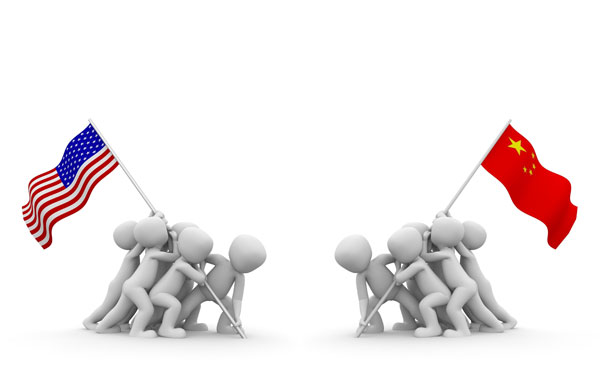
[The US and Chinese Flag. Photo Credit: Pixabay]
The White House announced on May 17th that China committed to purchasing at least $17 billion worth of American agricultural products annually through 2028 and agreed to resolve U.S. concerns over rare earth shortages, highlighting some of the most concrete results from a high-profile bilateral summit between US President Donald Trump and Chinese President Xi Jinping.
Trump and Xi wrapped up two days of meetings in Beijing and the two leaders have also decided to meet in September in the United States.
The White House announced that, in addition to the soybean purchase commitments made in October 2025, China has pledged to purchase at least $17 billion per year worth of American agricultural products each year through 2028.
China had previously promised to purchase at least 25 million metric tons of American soybeans over the next three years following a meeting between Trump and Xi in South Korea last November.
This weekend's readout, however, indicated that China is once again permitting sales of American meat and poultry but did not provide a number.
China's Commerce Ministry stated that both nations agreed to boost agricultural trade, but it did not specify or quantify soybeans.
In a factsheet detailing major agreements reached during the bilateral summit, China agreed to address U.S. concerns over shortages of certain specific rare earth elements including yttrium, scandium, neodymium, and indium.
Beijing controls the supply chain for numerous niche minerals critical to the manufacturing of automobiles, weaponry, and cellphones.
Despite a deal last October in which the White House claimed China agreed to allow shipments to flow freely, China's rare earth export controls, implemented in April of 2025 in retaliation for U.S. President Donald Trump's Liberation Day tariffs, continued to severely restrict exports of key minerals.
Beijing also moved to allay American concerns about China's export limitations on technology and equipment used in rare earth processing.
China has dominated the rare earth refining industry for decades, accounting for over 90% of global production.
However, its technology and expertise remain closely guarded, generally unavailable to foreign businesses.
Although the summit’s outcome fell short of expectations for some observers, foreign policy experts noted that U.S.-China relations are likely to see gradual improvement under the current administration.
Agreements to establish boards of trade and investment to facilitate bilateral talks in these sectors were mentioned in both the Chinese and American readouts.
The U.S. did not address tariffs, but China said lowering them would be part of the plans.
Beijing acknowledged the aircraft purchase agreement and stated that the U.S. would guarantee the supply of engines and other components, while the U.S. detailed Chinese plans to purchase 200 Boeing aircraft.
Although China has developed its own passenger aircraft, it remains reliant on parts manufactured in other countries.

- Brandon Chang / Grade 10
- Seoul International School