
![THE HERALD STUDENT REPORTERS [US]](/assets/images/logo_student_us.png)
![THE HERALD STUDENT REPORTERS [Canada]](/assets/images/logo_student_ca.png)

Hantavirus outbreak on cruise ship sparks global medical concern
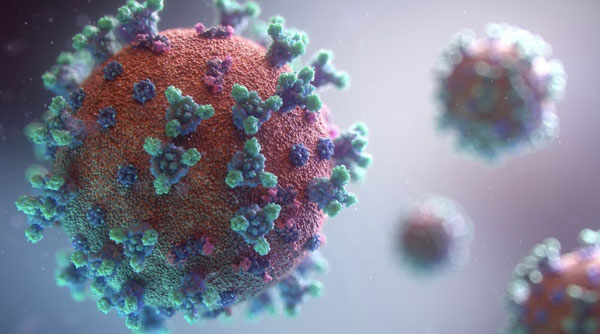
[Visualization of the coronavirus causing COVID-19. Photo Credit to unsplash]
On May 2nd, 2026, the World Health Organization (WHO) officially documented a rare cluster of Andes virus: a deadly strain of the hantavirus detected on a polar expedition cruise ship.
MV Hondius—the cruise central to the epidemic case—departed from Ushuaia, Argentina on April 1st, 2026 and was sailing through Antarctica when a passenger started experiencing unprecedented ailments.
After the first infected passenger died on board, the vessel was subjected to an emergency medical evacuation to the port of Granadilla de Abona in Tenerife, Spain; however, twelve more occupants were tested positive, resulting in three total deaths despite WHO’s prompt initiation to disembark.
After the collective trauma of COVID-19 six years prior, the public is inquisitive on the nature of the epidemic and its potential to aggravate into another pandemic.
Hantavirus was first successfully isolated by urologist Dr. Ho Wang Lee in the Hantan River area that flows through the Demilitarized Zone (DMZ) between North and South Korea.
Nonetheless, a prominent caveat is that the virus was first discovered during the Korean War, but was known under a different name (Korean hemorrhagic fever) and was not officially classified under a specific taxonomy until its first laboratory isolation.
If hantavirus is not an unprecedented case, why is the recent MV Hondius hantavirus outbreak especially escalating into a global vigilance?
To answer the query, it is primarily responsible for the anomalous virulence of the Andes virus.
With a mortality rate ranging from 30% to 50%, the hantavirus itself is recognized for its high fatality, causing severe pain, acute kidney failure, fever and pulmonary edema—the filling of fluid in the lungs.
Specifically, early symptoms of Andes orthohantavirus includes severe muscle aches in large muscle groups, dizziness, headaches, nausea and abdominal pain.
However, the Andes virus is considered even more hazardous than the standard hantavirus strains because it is the only known strain that is transmitted from person-to-person.
Worse yet, this particular strain is considered unpredictable in its spread, as the virus is indeed airborne while casual contact is not sufficient to transmit illness (spreads through prolonged contact), making it even more medically notorious.
Normally, hantaviruses are zoonotic, meaning they invade the human body through inhalation of airborne particles from infected rodent urine, feces, or saliva—which explains why the MV Hondius hantavirus outbreak is an anomaly.
Currently, there are no FDA-approved targeted treatments for hantavirus, with current medical care only being able to provide patients with early supportive treatment such as ventilators and oxygen therapy.
While the Andes virus’ low tendency to spread through casual contact ameliorates the concern of a new worldwide pandemic, global intervention and stringent quarantine protocols are necessitated to prevent further propagation.
The public and the social media have been rather frightened by the rise of a new epidemic, revealing the presence of global pandemic paranoia after much destruction occurred due to COVID-19.
Nonetheless, the article hopes to end on a positive note, reminding that humanity has faced multiple viral diseases yet has recovered.
On the same token, hantavirus will be addressed through further medical advancement and global scrutiny.

- Rachel Oum / Grade 9
- The Herald Insight