
![THE HERALD STUDENT REPORTERS [US]](/assets/images/logo_student_us.png)
![THE HERALD STUDENT REPORTERS [Canada]](/assets/images/logo_student_ca.png)

U.S.-led airstrikes on Iran escalate the regional conflict
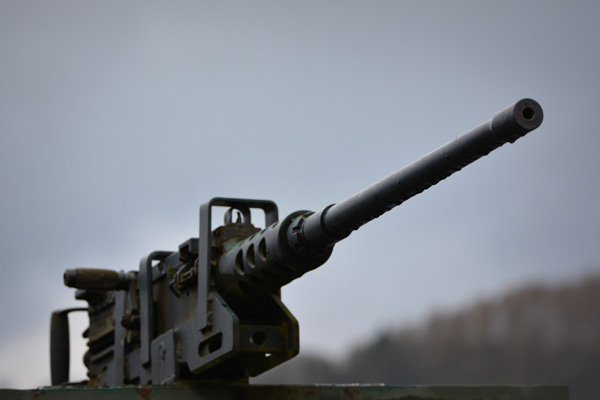
[Machine gun. Photo Credit to Pixabay]
On March 3, 2026, the United States, alongside Israel, launched large-scale airstrikes across Iran, marking a significant escalation point in tensions in the Middle East.
The strikes targeted numerous military and infrastructure sites in multiple cities.
According to Reuters, hundreds of civilians were killed, with estimates reaching approximately 787 fatalities.
The strikes were part of a broader conflict that initially began in late February 2026.
According to a report by the UK Parliament, U.S. and Israeli forces began coordinating operations against Iran on February 28.
The campaign was aimed at weakening Iran’s military capabilities, targeting its missile systems and other strategic infrastructure.
More than 150 airstrikes targeted Tehran and other major cities, causing extensive damage to infrastructure and surrounding residential areas.
The bombardment caused numerous points of damage.
Reuters reports how widespread the destruction was, from power and water outages to general civilian panic all around.
Reuters also reports that some strikes reportedly hit civilian locations, including a school and areas near hospitals.
Numerous civilians fled cities, while others sought shelter amid the chaos of a disrupted Internet, limited access to proper communication channels, and limited medical care.
Many hospitals became overwhelmed with patients, and evacuations were carried out across Iran.
In response to the strikes, U.S. officials defended the operation as a necessary measure to address security threats, emphasizing its focus on military targets.
However, Iranian authorities condemned the attacks.
As reported by Reuters, the Iranian authorities described the attacks as violations of international law, warning of potential retaliation.
The strikes continued to a broader escalation in hostility.
Iran launched missile and drone strikes targeting Gulf states, intensifying fears of a broader regional conflict.
The escalation also had broader global consequences, with concerns over instability in the Middle East affecting international energy markets.
Therefore, there have been numerous fluctuations in oil prices throughout March due to the uncertainty surrounding key shipping routes.
Analysts from the BBC caution that a prolonged conflict could disrupt global supply chains.
Beyond the military and economic impacts, the events of March 3 have also renewed discussions surrounding human rights, justice, and the pursuit of peace.
International organizations have called for investigations into civilian casualties and adherence to international humanitarian law.
Diplomatic engagement and conflict resolution efforts have been prompted, underscoring the importance of protecting civilian populations in times of war and conflict.
The March 3 airstrikes mark a critical juncture in the ongoing conflict, underscoring both the immediate consequences of military escalation.
As tensions persist, the situation remains precarious.
The international community continues to closely monitor developments, urging restraint and sustained diplomatic engagement to de-escalate the crisis.
Many experts believe that the next few weeks will be critical in determining whether the conflict expands or a diplomatic solution can be found.

- Chaewon Lee / Grade 11
- Seoul Foreign School