
![THE HERALD STUDENT REPORTERS [US]](/assets/images/logo_student_us.png)
![THE HERALD STUDENT REPORTERS [Canada]](/assets/images/logo_student_ca.png)

Arctic sea ice reaches to lowest winter level ever recorded
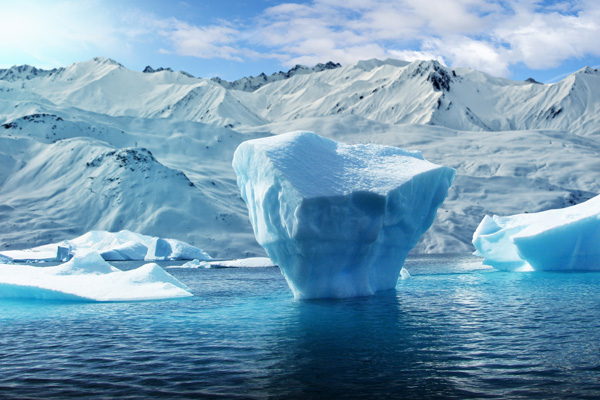
[Iceberg. Photo Credit to Pixabay]
On March 15, 2026, Arctic sea ice reached its annual maximum extent at just 5.52 million square miles, marking the second consecutive year that winter ice coverage has tied for the lowest peak recorded since satellite monitoring began in 1979.
Arctic sea ice levels are especially crucial in summer for Earth’s climate because without the ice reflecting the sunlight, more heat energy goes into the oceans.
Ice around the poles acts as the Earth’s refrigerator, and wildlife such as polar bears and seals depend on sea ice to maintain their survival.
Lack of sea ice in the Arctic creates new shipping routes, which in turn causes geopolitical disruptions, making once-ignored places such as Greenland more desirable.
The record low was announced Thursday as the temperature simultaneously broke March heat records across the United States, Mexico, Australia, Northern Africa, and parts of Northern Europe, with climatologist and weather historian Maximilano Herrera describing it as “by far the most extreme heat event in world climatic history.”
Roughly half a million square miles compared to historical averages, an area approximately twice the size of Texas has been lost, indicating more than just numbers, a section of Earth’s natural cooling system no longer exists.
The Arctic was supposed to be at its peak ice coverage during this period; however, the region is showing clear signals of global warming that’s fundamentally changing how much ice can form during the coldest months of the year.
As this trend continues, it leads to global sea-level rise, increased coastal flooding, and releases trapped methane which accelerates climate change.
This year’s maximum extent came in approximately 9 percent lower than the average from 1981 to 2010, marking one of the most dramatic shifts in polar climate records.
Walt Meier, a sea ice scientist at NSIDC, explained that one or two record low years don’t necessarily mean much by themselves, but in the context of the significant downward trend that his team observed since 1979 shows the reinforcement of dramatic change to Arctic sea ice throughout all seasons.
His point emphasizes that while natural variation may cause fluctuations year by year, the consistent pattern for nearly five decades reveals a huge fundamental change in the environment.
This record is the consequence of accumulated ongoing buildup of heat-trapping gases in the atmosphere from the burning of fossil fuels, heating the air, melting the ice, and worsening weather extremes worldwide.
As ice disappears, it exposes a dark ocean that absorbs heat instead, creating a cycle where global warming causes ice loss, which in turn accelerates more warming.
Indigenous Arctic communities are experiencing these changes firsthand every day, as traditional ice-dependent hunting and travel routes become increasingly unreliable with thinner and less predictable ice.
Furthermore, coastal villages face mounting threats from erosion and storm surge as the protective barrier of sea ice that once protected them diminishes each and every year.
The situation demands immediate action, including the limitation of global temperature rise to 1.5 degrees Celsius to maintain Arctic summer ice and prevent complete transformation of the region.

- Sogyu Kim / Grade 10
- Korea International School