
![THE HERALD STUDENT REPORTERS [US]](/assets/images/logo_student_us.png)
![THE HERALD STUDENT REPORTERS [Canada]](/assets/images/logo_student_ca.png)

Trump nominates Kevin Warsh to the Fed board of governors
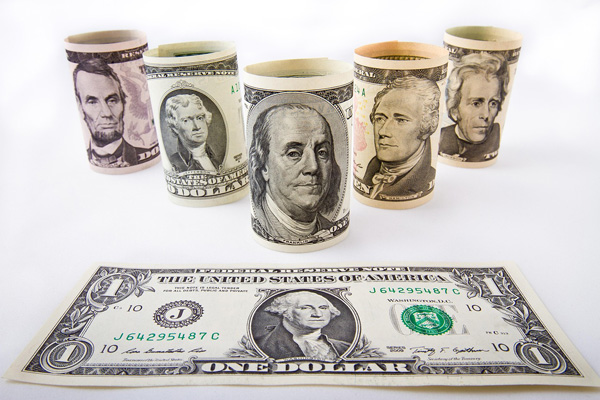
[Photo Credit to Pixabay]
On January 30th, 2026, U.S. President Donald Trump nominated Kevin Warsh, a former Federal Reserve governor, to the Federal Reserve Board of Governors, finalizing his decision to position Warsh as the next chairman of the central bank after Jerome Powell’s term expires in May 2026.
Trump noted that the nomination reflected his expectation that the Federal Reserve would actively pursue policies to promote economic growth, reiterating his belief that interest rates should be lower than they currently are to sustain the U.S. economy.
In addition, Trump emphasized that Warsh’s extensive career at the Fed would enable him to make necessary decisions and facilitate the foundation for a more responsive monetary policy framework.
The nomination process has been finalized after months of public tension between Trump and the Federal Reserve, as Trump has repeatedly criticized the Fed’s cautious approach to interest rate cuts, which he claimed led to stifled growth in a booming economy.
While the White House has not formally challenged the Fed’s authority, Trump has consistently questioned the institution’s monetary policy decisions, noting that they may conflict with the administration’s economic objectives and be contrary to the public interest.
Amid heightened tensions between the administration and the Federal Reserve, the nomination of Warsh, with professional experience across government fiscal institutions, is believed to reduce the risk of institutional shock.
Warsh holds degrees from Stanford University and Harvard Law School. Before joining the Federal Reserve, he worked as an investment banker at Morgan Stanley and served as a special assistant to the president for economic policy during the George W. Bush administration.
Warsh joined the Federal Reserve in 2006, serving on the Federal Reserve Board of Governors until 2011, becoming the youngest governor in modern history at 35. During the 2008 financial crisis, he played a central role in the Fed’s response, alongside former Fed chair Ben Bernanke, to the collapse of global financial markets.
In recent years, Warsh has shared multiple perspectives that align with Trump, arguing that the Federal Reserve’s policies have been broken for an extended period and have drifted beyond its core mandate.
In November 2024, Warsh commented in The Wall Street Journal that rapid advances in artificial intelligence could act as a disinflationary force by boosting productivity.
Business leaders and finance experts have expressed diverse views on Warsh’s nomination, with some praising his extensive career shaped by years of accumulated experience in economic policy, and others expressing concern about the Fed’s possible development into a populist-centered institution.
Jamie Dimon, the Chief Executive Officer at JPMorgan Chase & Co, welcomed the nomination, saying “Kevin Warsh is a highly respected and experienced leader — across government, business and education — who I have seen act with integrity and a dedication to making our country better.”
However, Mark Zandi, chief economist at Moody’s Analytics, warned that “Sustained political pressure on the Federal Reserve risks undermining investor confidence. If monetary policy were perceived as being shaped by populist demands rather than economic fundamentals, the long-term consequences could outweigh any short-term gains.”
As the Federal Reserve navigates a leadership transition at a critical juncture for the global economy, Warsh’s nomination highlights a core question: Can the central bank maintain institutional independence amidst growing political expectations?

- MinSeop (Mason) Kim / Grade 10
- St. Johnsbury Academy Jeju